
Sheet Metal Prototype Fabrication: From Drawing to First Article
The prototype is the most honest step in fabrication—a sample either matches the drawing or it doesn’t. If you have a drawing and want to see it in metal before committing to production, this sheet metal prototype fabrication guide walks through the process, what samples validate, and what drives cost and lead time.
Prototyping exists to answer questions before mass production commits money: does the part function, does it fit the assembly, can the process hold the tolerances? Sheet metal prototype fabrication answers those questions with a physical part instead of a drawing estimate — and a prototype that answers them saves far more than it costs.

Sheet Metal Prototype Fabrication: The Five-Step Process
Step 1 — Drawing and RFQ. Send the 3D model or 2D drawing with material, quantity, critical tolerances, and surface finish. The clearer the RFQ, the fewer rounds of clarification — and the faster the quote.
Step 2 — DFM review. Engineers review manufacturability before quoting: which tolerances are achievable, which features need adjustment, and what would reduce cost without changing function. The feedback comes with the quote, not after.
Step 3 — Manufacturing without formal tooling. For most sheet metal samples involving laser cutting, bending, and simple welding, fabrication can be done without formal tooling, avoiding tooling cost and lead time. This approach suits prototypes and small-batch samples, letting you validate the structure quickly before design sign-off. But for deep drawing, complex stamping, or structures that depend on forming dies, the prototype stage may still require trial tooling. For detailed process selection, see our sheet metal fabrication process guide.
Step 4 — First-article inspection (FAI). We provide an FAI report covering the critical dimensions specified on the drawing, per project requirements. Tolerance behavior matters at this stage, which is why our sheet metal tolerances reference shows what each process can hold.
Step 5 — Delivery and iteration. The sample validates function, fit, process, and finish. The next revision starts from the first article — not from a blank sheet — so each round gets shorter.
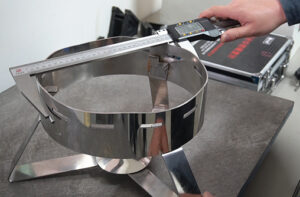
Sheet Metal Prototype Fabrication: What Samples Validate
A prototype validates the part — and it validates the fabrication method. Four things to check on your sample:
- Function. Does the part do its job?
- Fit. Does it assemble with the mating parts? Fixing fit issues at the prototype stage is far cheaper than fixing them at assembly.
- Process. Can the chosen route hold the tolerances repeatedly, or does a feature sit at the edge of capability?
- Finish. Does the surface treatment meet the requirement, and does it survive handling?
A passing prototype does not guarantee stable production. A single sample can meet the drawing through manual adjustment, extra rework, or special fixturing — but production needs a repeatable process. Material batch variance, bend springback, weld distortion, tool condition, and inspection method can all shift batch dimensions. The prototype stage must confirm not only that the part can be made, but that the process can make it consistently.
The prototype-to-production gap: most sheet metal samples are made without formal tooling, so per-part cost is typically higher; in production, the process can switch to stamping and tooling suited to volume, amortizing tooling cost across the batch. When the prototype passes, the supplier evaluation that follows — covered in our OEM sheet metal fabrication partner evaluation guide — decides who takes the part to production.
Prototype Cost and Lead Time: What Sets Them
Sheet metal prototype fabrication cost and lead time depend on a handful of variables, not on a fixed rate.
Cost drivers: quantity, geometry complexity, material, tolerance, and surface finish. Without tooling, prototype pricing reflects material, machine time, and inspection—and because those drivers interact, our custom sheet metal fabrication cost guide breaks down how they affect the quote.
Lead-time drivers: material availability, machine scheduling, and inspection depth. A simple bracket with material in stock can move much faster than a complex enclosure that needs special material; a rough estimate is only a starting point — confirm the schedule with the supplier before committing.
How We Run Prototypes
Prototyping is the most honest part of our work — and our sheet metal prototype fabrication process is structured around one principle: the sample either matches the drawing or it does not. Prototype and production run inside one manufacturing system, across three capabilities:
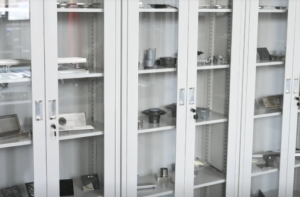
- Engineering. Nineteen engineers review every drawing (DFM) before quoting; they answer inquiries within 2 hours and decide manufacturability before the first cut.
- Prototyping. Laser cutting, press braking, and welding produce the sample; first-article inspection (FAI) is provided according to project requirements, with critical dimensions measured on CMM at high accuracy.
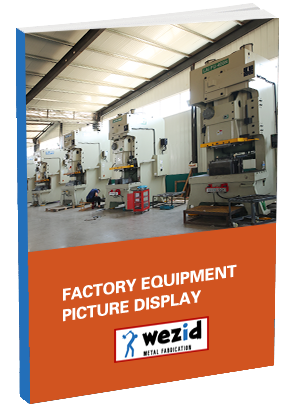
- Production. 40 stamping presses (80–400 tons), welding lines, and the finishing line scale up the approved part.
The point of one system: once the sample is approved, you do not hand the validated part to another supplier to rebuild the process from scratch. Nineteen engineers, 70,000+ part numbers of manufacturing experience — since 1999, we have delivered custom metal parts to 3,000+ companies in 100+ countries. Send us your drawing — the prototype review is free.
Questions about the process? Contact us — or upload your drawings to get started.
|
From Drawing to First Article — Get Your Prototype Today ✅ Free DFM review · FAI report with every sample · 2-hour response time
Send your drawing — the prototype review is free, and the FAI report ships with the sample |
📩 Response within 2 hours · DFM feedback and transparent quote within 24 hours
|
Related Posts
-
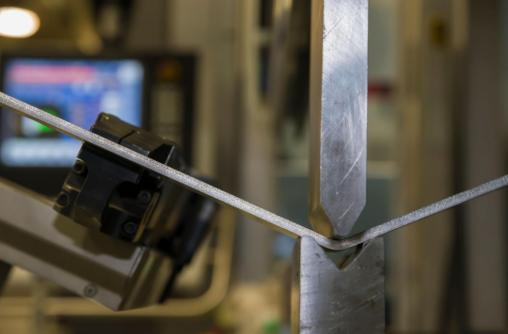
Press Brake Springback: Why Bends Overshoot and How Factories Compensate
Press brake springback is elastic recovery: when the brake releases, the part straightens a few ...
-
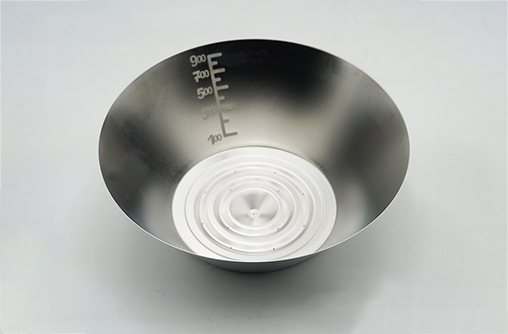
Deep Drawing Sheet Metal: Draw Ratios, Limits & Multi-Hit Setup
Deep drawing sheet metal is a forming operation: a punch pulls a flat blank into a cup or pan sh ...
-

Sheet Metal Gauge Chart: Thickness, Strength & Cost by Gauge
This sheet metal gauge chart is the reference our press engineers use before quoting. Gauge is a ...