
How to Choose a Sheet Metal Fabrication for OEM Partner: Procurement Evaluation Guide
For OEM manufacturers, outsourcing sheet metal fabrication is rarely just about saving a few dollars per part — it is a strategic decision that affects product launch timing, quality consistency, and long-term supply security. Whether you are a machinery manufacturer, an electronics company, or an automotive parts supplier, the partner you choose determines how faithfully your design intent is carried from CAD drawing to finished part.
This guide is written for procurement engineers and supply chain managers evaluating sheet metal fabrication for OEM partners. It covers eight criteria that separate reliable partners from costly mistakes, the qualification and factory visit process, and a reusable supplier checklist for every RFQ round — the goal is to move supplier selection from brochures to evidence.

What Sheet Metal Fabrication for OEM Really Means
In the OEM model, the original equipment manufacturer owns the product design — form, fit, and function — and outsources parts production to a manufacturer that works from the supplied drawings or 3D models. This differs from ODM, in which the manufacturer also participates in the design. As the buyer, your job is to confirm that a manufacturer can reproduce your design consistently in mass production — not just produce one good sample.
With that definition in place, here are the eight dimensions to evaluate.
Eight Dimensions for Evaluating Contract Manufacturers
1. In-house capability vs outsourced processes
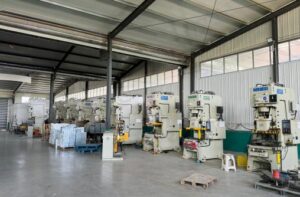
Start with the process list: laser cutting, stamping, bending, welding, surface finishing, and assembly. A factory that owns most of its processes has far better control over quality and delivery than one that subcontracts critical steps to unknown suppliers. Ask exactly which processes are in-house, which are outsourced, and who reviews the subcontractors — and under what criteria they were approved.
2. Tolerance capability matched to your drawings
Every drawing carries tolerance requirements — and this is where vague promises usually appear. Set realistic expectations first: laser-cut and stamped critical features can reach ±0.05 mm, while formed features such as bends and welds typically require wider tolerances. Exact values depend on material thickness and geometric complexity. Hence, a reliable partner discusses your drawing feature by feature rather than making a blanket capability claim. If a supplier promises tight tolerances on every feature without asking about your geometry, that is a warning sign, not a benefit.
Put this to the test at quotation time: ask the supplier to state, in writing, which tolerance it guarantees on which features. A vague answer such as “we are very precise” is a red flag; specific numbers — for example ±0.1 mm on laser-cut holes, ±0.3 mm on bends, and wider allowances on welded features — are what you need. A blanket promise on every feature, on the other hand, tells you exactly where the process stops.
3. Quality system and inspection evidence
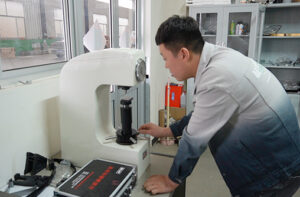 Quality claims only count when they are documented. A reliable sheet metal fabrication OEM partner maintains a complete inspection workflow, including first-article inspection reports, material certificates, and in-process checks at defined inspection points. Ask about measurement equipment — for example, CMM machines with micron-level measurement to verify critical dimensions — and request sample inspection reports from past projects. Documentation quality is the fastest measure of process discipline.
4. Engineering feedback and DFM depth
The depth of a supplier’s design-for-manufacturability (DFM) feedback directly reflects its production experience. After you send drawings, does the reply include specific questions about bend radii, material thickness, or tolerance accumulation? Engineers who challenge your design early usually save you from expensive production problems later. A reply that accepts everything without comment usually means nobody seriously reviewed the drawings.
5. Prototype speed and iteration approach
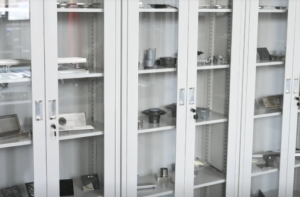 The speed of first articles determines your development pace. Ask about prototype lead times, how many revision rounds the quote includes, and — critically — whether samples are made with the same tooling and processes as production. When samples match batch production, the ramp-up is predictable; when they do not, you only discover problems after committing to mass production.
6. Capacity and delivery discipline
A factory’s delivery record is the strongest predictor of future performance. Ask for on-time delivery data and how capacity is planned during peak seasons. Our Cangzhou factory maintains a firm delivery date on every order — we publish this number because it is tracked order by order. Hold every candidate to the same standard.
7. Communication, confidentiality, and documentation management
Overseas sourcing lives or dies by communication. Evaluate response speed, the English level of engineering contacts, and how deviations are recorded and communicated during production. Drawing confidentiality matters equally: confirm the supplier operates under a non-disclosure agreement (NDA), that your files are accessible only to the project team, and that your tooling is never used for other customers without written consent.
8. Supply chain and location: why industrial clusters matter
Finally, look at where the factory actually is. Location advantages are often underestimated in sheet metal fabrication for OEM RFQs. Still, their impact on cost and delivery cannot be compensated by any negotiation. A factory within a mature manufacturing cluster sources steel, surface treatment, and fasteners locally — thereby shortening procurement lead times and stabilizing prices. Logistics matters too: our factory in Cangzhou, Hebei — part of the Nanpi hardware stamping cluster — is within two hours of Tianjin Port, keeping sea freight competitive for OEM buyers in Europe and North America.
Red Flags in Sheet Metal Fabrication for OEM Evaluation
- A trading company disguised as a factory — read our guide on how to tell a real factory from a trading company before shortlisting.
- Blanket tight-tolerance promises without reviewing your drawings.
- No inspection reports or material certificates available.
- Prototype capability with no evidence of mass-production scale.
- Vague quotes that shift after drawings are finalized.
Even a well-equipped shop can fail an OEM program if communication, documentation, or delivery discipline is weak — which is why the checklist below does not stop at equipment.
Supplier Qualification and Factory Visits
Suppliers that pass evaluation still go through a formal qualification process before earning a place on the approved supplier list. It usually runs in five steps:
| Stage | What happens | Why it matters |
|---|---|---|
| 1. Initial screening | Documents: certifications, references, capability list | Filters suppliers before time is invested |
| 2. On-site visit | In person or by video: equipment, quality system, processes | Verifies claims face to face |
| 3. Sample certification | Prototype parts with FAI report | Qualifies the actual product |
| 4. PPAP / quality agreement | Process documentation, control plans | Formalizes how the part is made |
| 5. Periodic reviews | Scheduled checks of batches and processes | Keeps quality from drifting |
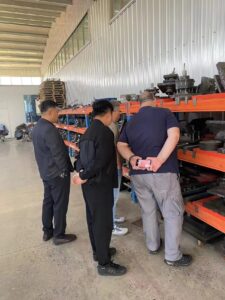
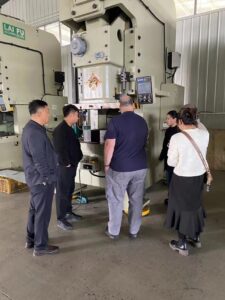
The on-site visit is the decisive stage — no matter how good the paperwork looks, the customer walks the shop floor. During the visit, customers verify four things:
- Equipment matches the capability list
- The quality system is real, current, and followed in practice
- Documentation is traceable — batch reports, material certificates, calibration records
- Engineers are involved, not just sales
A factory that meets these four checks with evidence is ready for qualification.

The Supplier Evaluation Checklist for OEM Buyers
♦ Confirm which processes are in-house, and arrange a factory visit or live video walkthrough
♦ Verify tolerance capability against one critical feature from your own drawing
♦ Request sample inspection reports, material certificates, and CMM measurement records
♦ Test DFM feedback quality with a real part — evaluate the questions asked, not the answers given
♦ Confirm sample-to-production process consistency and tooling ownership
♦ Check on-time delivery rates and capacity planning for your order size
♦ Get NDA coverage, data handling, and tooling exclusivity terms in writing
♦ Verify logistics: port distance, shipping method, and export packaging standards
For what to check when parts arrive, see our receiving inspection guide—the acceptance step in the same quality loop.
Why Our Factory Meets These OEM Supplier Criteria
Every candidate should be able to answer the checklist above. Here is how we answer it:
| Evaluation criterion | Our capability |
|---|---|
| In-house processes | Stamping, laser cutting, bending, welding, finishing — no subcontracting |
| Engineering support | 19 engineers + DFM review on every drawing |
| Quality | ISO 9001:2015 + CMM micron-level inspection + FAI on every prototype |
| Production experience | 70,000+ custom part numbers |
| Global supply | 3,000+ customers in 100+ countries |
| Delivery | firm delivery date on every order |
| Location | Nanpi stamping cluster, Cangzhou, Hebei — under 2 hours from Tianjin Port |
| Capacity | 40+ presses to 400 t, two 6 kW laser cutters, in-house bending and welding |
We publish these numbers and welcome an on-site visit to verify them — send us your drawing, and we will answer against every criterion on this checklist.
FAQ
|
Hold Us to the Eight Criteria: Send Your Drawings Today ✅ In-house capability · Engineering depth · Quality evidence · On-time delivery
Send your drawing and annual volume — we will quote the part and the program |
📩 Response within 2 hours · DFM feedback and transparent quote within 24 hours
|
Related Posts
-
Press Brake Springback: Why Bends Overshoot and How Factories Compensate
Press brake springback is elastic recovery: when the brake releases, the part straightens a few ...
-
Deep Drawing Sheet Metal: Draw Ratios, Limits & Multi-Hit Setup
Deep drawing sheet metal is a forming operation: a punch pulls a flat blank into a cup or pan sh ...
-

Sheet Metal Gauge Chart: Thickness, Strength & Cost by Gauge
This sheet metal gauge chart is the reference our press engineers use before quoting. Gauge is a ...