
Why Can We Customize Almost All Metal Parts
Most metal parts come down to one question: can the shop form it, machine it, and finish it under one roof? For Cangzhou Weizhi, the answer is usually yes. And the reason is the equipment behind it, not a promise.
Since 1999 we have built the plant around coverage. As a result, the part you send moves through the full process. It covers forming, cutting, bending, machining, welding, and surface treatment. In the end, none of it leaves the floor.
What “almost all” actually covers
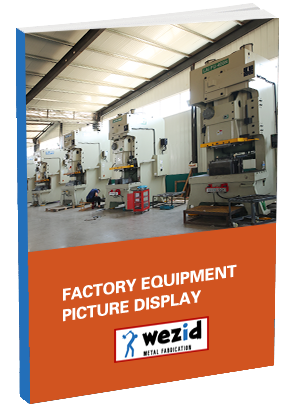
Custom sheet metal work starts at the press. We run 40 stamping presses in the 80 to 400 ton range. That range holds tight tolerances on thin brackets. It also forms thick structural parts. From there the work flows into 6 kW laser cutting. Then it moves to three bending machines for the flanges. Finally, an oil pressure line takes the heavy forming.
Machined work stays on the same floor. Three CNC milling and turning machines do it. They handle a milled face, a tapped hole, or a turned feature. For assembled parts we have an electric welding line. We also have an automatic spot welder. And a forger takes the heavier components.
Why verification is part of the customization
A part is only “custom” if you can prove it is right. We run two CMMs to check critical dimensions against your drawing. So the tolerance you specify is the tolerance you receive. This is the difference. In short, it separates a shop that ships a part from one that proves it is within spec.
The finishing step
Finally, two surface treatment lines cover the coating work. They handle the finish that follows fabrication. As a result, the part leaves ready to install. And it is not sent to a second supplier.
Not sure whether a part is in range? Send it anyway. We will flag any item that needs a different process before the spec is frozen. In other words, we catch it early. Request a quote, see the full breakdown in our equipment list, or review the custom parts catalogue.