
The Customer Asked, “What is the Tolerance?” — Our Laser Cutting Accuracy Standard
Last week, a client sent us the drawings. The first sentence was: “Can your tolerance be controlled within what range?”
This is not a technical issue. It’s a matter of trust.
What the client really wanted to ask was: Can your Laser cutting accuracy consistently meet the requirements of my drawings? If not, how high would the cost and risk be for me?
Today, we will answer this question directly.
How do we define our laser cutting accuracy standards?
Our laser cutting accuracy standard is ±0.05mm to ±0.1mm. The breakdown by material thickness is as follows:
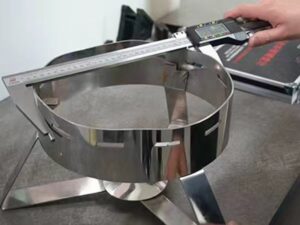
How can we ensure that laser cutting accuracy remains stable and meets the required standards?
The problem is merely that the numbers are insufficient. Here are the actual things we did in the workshop:
Equipment configuration
- 6kw laser cutting equipment (2 sets)
- Automatic spot welding machine (1 set)
- Electric welding production line (3 sets)
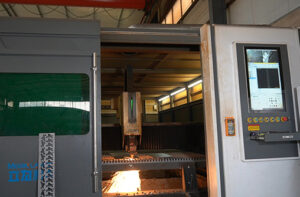
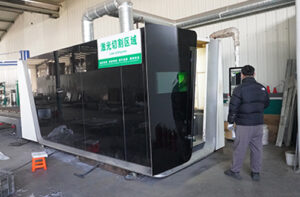
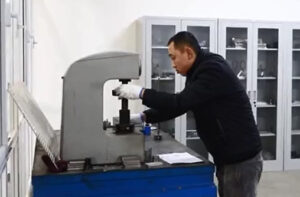
Testing tools
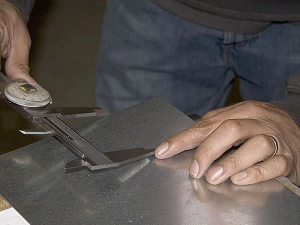
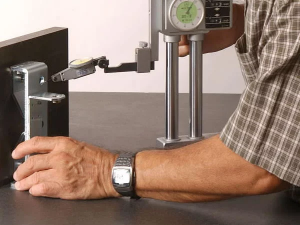
- Precision measuring tools
- Coordinate Measuring Machine (CMM, 2 sets)
Process control
- First article verification: Full-size measurement of the first piece in each batch
- Sampling inspection: Random inspection according to a certain ratio during production
- Re-inspection before shipment: Secondary confirmation of key dimensions
Why does the accuracy of Laser cutting affect your costs and efficiency?
Let’s do a calculation in the way that you care about the most:
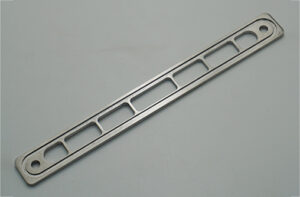
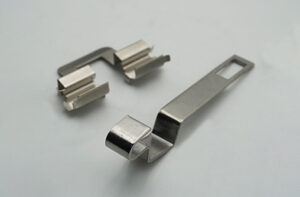
A customer previously used another supplier with a tolerance of ±0.2mm. Before welding, they always had to trim the edges manually.After switching to us, the laser-cutting accuracy remained stable at ±0.1mm. Each batch saved 2 hours of manual trimming time, and the scrap rate decreased by 60%.
How can one identify situations where accuracy decreases?
We have clearly stated this to avoid you discovering the problem after receiving the goods:
- The thicker the material, the margin of error will be slightly increased (refer to the tolerance table above)
- Large-sized parts (over 1.5 meters) will have cumulative errors.
- High-reflection materials (copper, aluminum) require special processes, and the accuracy will be slightly lower than that of carbon steel.
How do you start evaluating your parts?
📄 Send us your drawings and tolerance requirements.
- ✅ Free evaluation of processing feasibility
- ✅ Reply with precision feasibility within 24 hours
- ✅ Provide first-piece verification (batch production only after qualification)
Send the drawings immediately / Contact us.
/contactSupport formats: DWG / DXF / STEP / PDF
✉️ What tolerance do you require for your part?
Please send the drawing over, and we’ll take a look at it for you.
Related Posts
-
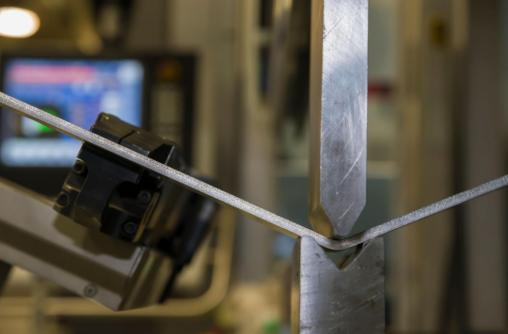
Press Brake Springback: Why Bends Overshoot and How Factories Compensate
Press brake springback is elastic recovery: when the brake releases, the part straightens a few ...
-
Deep Drawing Sheet Metal: Draw Ratios, Limits & Multi-Hit Setup
Deep drawing sheet metal is a forming operation: a punch pulls a flat blank into a cup or pan sh ...
-

Sheet Metal Gauge Chart: Thickness, Strength & Cost by Gauge
This sheet metal gauge chart is the reference our press engineers use before quoting. Gauge is a ...