
ISO 9001 Certified Sheet Metal Fabricators: Does Certification Reduce Your Total Cost?
An ISO 9001 certified sheet metal fabrication manufacturer’s quote is not necessarily the lowest, nor necessarily higher — what buyers should compare is total cost, not just the unit price. Defects, rework, incoming inspection, and delivery risk can all add real cost beyond the quote. This guide looks at where systematic quality management can help, where the honest limits are, and why the effect matters most on small batches.
ISO 9001 Certification and Total Cost: Where the Savings Come From
When the quality management system is effectively executed and process capability matches the order requirements, an ISO 9001 certified sheet metal fabrication manufacturer’s systematic management can help reduce total procurement cost in three areas.
 Defect and Rework Costs
The highest hidden cost in metal parts is the part that fails inspection or fails in the field. A certified quality system is designed to catch problems early: first-article inspection, in-process checks, and controlled release. Fewer escapes mean fewer rework loops, fewer scrapped batches, and fewer delivery delays. You are not paying for the certificate — you are paying to avoid the cost of a bad batch.
Inspection and Receiving Costs
When a supplier consistently provides stable quality records, batch data, and inspection reports, a buyer can more easily optimize incoming inspection based on actual performance — for example, adjusting sampling depth or reducing repeated measurements. Whether to adjust still depends on part risk, the supplier’s history, and the buyer’s own quality requirements. ISO 9001 certification does not automatically reduce your incoming inspection. Still, a quality system that actually runs provides the data foundation for that decision.
Delivery and Liability Costs
When a problem does occur, traceability decides how expensive it becomes. A certified system links material batches, process records, and inspection results so you can quickly trace a field issue to its source. Faster root-cause analysis shortens disputes, reduces expedited freight, and lowers the cost of liability conversations with your own customers.
What Certification Does Not Do
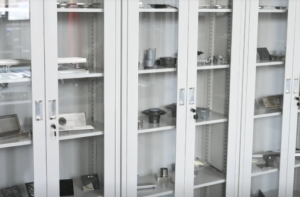 It is worth being clear about the limits. ISO 9001 does not by itself guarantee lower defect rates on every project. Still, an effectively executed quality management system helps a manufacturer identify, record, and address quality risks more systematically. Final part quality still depends on process capability, engineering judgment, equipment condition, material control, and how the system is executed. The cost case above holds only when these support the system—a certified supplier can still quote the wrong process route. That is why certification should be combined with a capability review, not a replacement for one. See our sheet metal vs CNC comparison before shortlisting, and verify the certificate itself — company name, scope, and validity — with the issuing body before relying on it.
Small-Batch Orders: Where Quality Cost Matters Most
Inspection and Record Costs Are More Visible on Small Batches
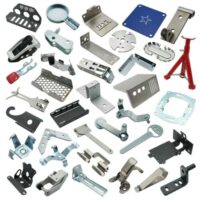
For small batches, fixed quality costs — inspection setup, record keeping, first-article checks — are spread over fewer parts, so their share of unit cost is higher. A certified system does not remove those costs. Still, it standardizes them: the same process applies whether the order is 10 parts or 1,000, and records are reusable across repeat orders. This is the same fixed-cost logic that decides who wins on low volume. An ISO 9001 certified sheet metal fabrication manufacturer’s standardized process does not remove these fixed costs — it makes them predictable and reusable across repeat orders.
The Cost Advantage of Getting It Right the First Time
Small batches have no room for rework loops. On a 10-piece order, first-article confirmation may take 30 minutes and final inspection another 20 — these steps do not disappear whether you make 10 parts or 1,000. The expensive part isn’t those 50 minutes; it is discovering a critical hole position is off only after all 10 parts are finished, which can mean reworking or remaking the whole batch. Through first-article confirmation, process control, and clear inspection requirements, a quality system aims to find and resolve problems before the batch is complete. That is the real cost advantage of certification on low-volume work.
Where Certification Meets Cost Control
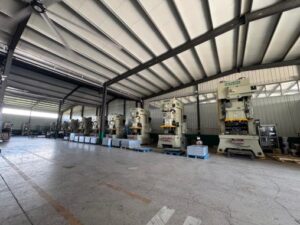
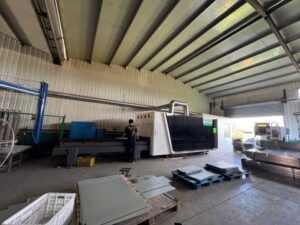
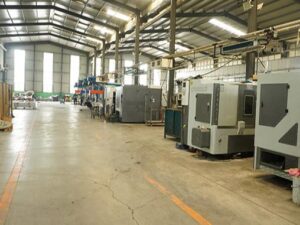
 At our 9,000 m² plant in Nanpi, Hebei, quality control doesn’t start as a final check after production—it starts with drawing review. When a drawing arrives, engineers first confirm critical dimensions, the process route, and inspection requirements. They correct any route that doesn’t meet tolerance or quantity requirements before quoting, not after. During production, first-article confirmation and process control follow project requirements, and final inspection records support batch traceability — so the fixed quality costs described above are known in advance, not discovered later.
We have been manufacturing metal parts since 1999, and our production system currently operates under ISO 9001:2015, covering laser cutting, stamping, bending, welding, and CNC machining. In practice, this means certification participates in cost control from the quote onward: standardized inspection, reusable process experience, and records that let repeat orders skip redundant confirmation.
|
Get a Free Quality and Cost Review for Your Parts ✅ ISO 9001:2015 · DFM review · FAI reports · Batch traceability
Get a quote that separates material, engineering, setup, and processing — not just a total |
📩 Response within 2 hours · Itemized quote · Quality records included
|
FAQ
Related Posts
-
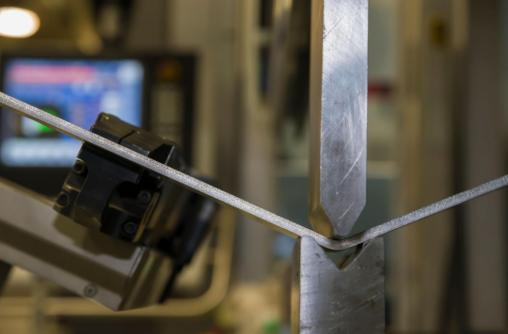
Press Brake Springback: Why Bends Overshoot and How Factories Compensate
Press brake springback is elastic recovery: when the brake releases, the part straightens a few ...
-
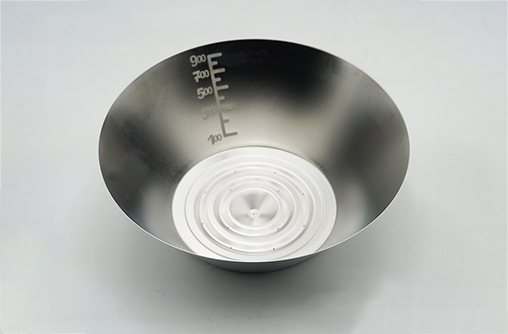
Deep Drawing Sheet Metal: Draw Ratios, Limits & Multi-Hit Setup
Deep drawing sheet metal is a forming operation: a punch pulls a flat blank into a cup or pan sh ...
-

Sheet Metal Gauge Chart: Thickness, Strength & Cost by Gauge
This sheet metal gauge chart is the reference our press engineers use before quoting. Gauge is a ...