
Low Volume Sheet Metal Fabrication Cost: How to reduce it?
Low volume sheet metal fabrication is expensive to look at, but not because the unit price is unfair. Material is always a significant line — its share varies with material price, part size, complexity, and order quantity — while engineering, setups, and preparation cost roughly the same whether you make 10 parts or 100. So the fewer parts, the more each one costs. Understand the drivers, and you can cut real money: by design, by batch, and by reading the quote correctly.
This guide breaks the price into four drivers, shows how to cut each one, and explains why a cluster-based supplier in Nanpi keeps small orders affordable.
Low Volume Sheet Metal Fabrication Cost: The Four Drivers
Engineering, Setups, Material, Post-Processing
Four lines decide your price. Engineering: reading your drawing, calculating bend deductions, running DFM analysis — done once per part number, independent of quantity. Setups: every program change, die change, and bend setup can take half an hour to several hours; making 10 parts or 1,000 costs nearly the same changeover time per run. Material: cost depends not only on price per kilo but on nesting utilization—sensible nesting and cross-part sharing cut scrap and increase the usable area of each sheet. Post-processing: painting, plating, anodizing, and similar steps often carry minimum batch sizes or fixed fixture, color-change, and scheduling costs that can noticeably lift per-piece price on small orders. A supplier that controls all four controls your cost and quoting.
The Tooling Crossover in Low Volume Sheet Metal Fabrication
No fixed quantity fits every part. For low-demand projects, laser cutting and bending avoid tooling investment entirely; as quantities grow, stamping and dedicated tooling gain a per-piece advantage. What matters is not “500 pieces or 1,000” but four numbers: one-time tooling cost, per-piece processing cost, total demand, and expected purchase volume over the product lifecycle. The best process sits where total cost is lowest — run both routes and compare.
How to Cut Low Volume Sheet Metal Fabrication Costs
Nesting, Batch Merging, and Design Fixes
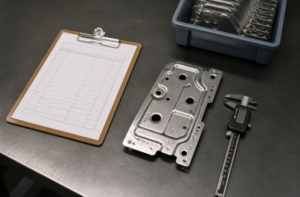 Three levers cut cost without cutting quality. Nest your parts together so one sheet run yields several orders. Merge adjacent orders into the same run to shrink setups. Simplify features that burn engineering and setup time — a small drawing change often saves more than any discount. None of this costs you anything to ask; most suppliers only do it when the customer does.
Reading an Itemized Quote
A quote that separates material, engineering, processing, finishing, and tooling shows exactly where money goes — and where to negotiate. A single-number quote hides it. Ask for the breakdown, compare buckets, not totals, and confirm inspection and packaging are included. Transparent quotes are the cheapest quality control in the process.
Why Cluster Supply Chains Help Small-Order Cost
Low volume sheet metal fabrication is sensitive to supply-chain response. What counts is what happens inside the factory — and what the cluster around it can supply.
How Cluster Supply Chains Control Small-Order Cost
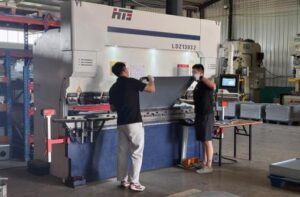
Small-batch orders are especially sensitive to supply-chain response. A factory inside a hardware-manufacturing cluster can usually source local materials, tooling support, and finishing resources faster, cutting procurement waits and cross-region coordination. At our plant, laser cutting, stamping, bending, welding, and main finishing processes are coordinated within one manufacturing system; the cluster supply chain adds special materials and support needs. That combination reduces subcontracting steps and improves scheduling flexibility for small-batch orders. For the wider location picture, see our Cangzhou overview.
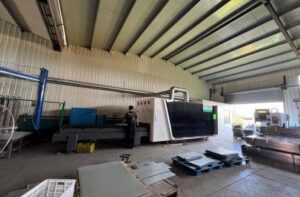
What Small-Order Cost Looks Like at Our Plant
Cost does not start when the first part is cut. When a drawing arrives, engineers confirm material, flat pattern, and process route; machines load programs and prepare tooling; sheets are sourced, nested, and cut — even a 10-piece order runs through all of it. So on small orders we hunt three savings: shared sheets across orders, nesting that cuts waste, and design features that add changeover time without adding function.
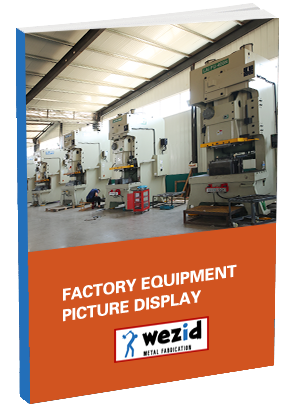
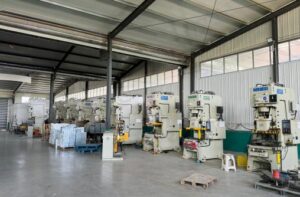
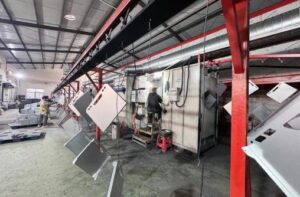
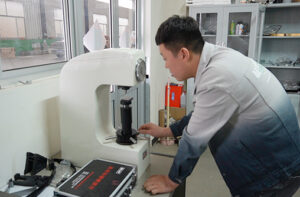
This is how low volume sheet metal fabrication has been run from our Nanpi plant since 1999 — 19 engineers, 40 presses from 80 to 400 tons, laser cutting, stamping, bending, welding, and main finishing coordinated in-house under ISO 9001:2015. 70,000+ part numbers to 3,000+ companies in 100+ countries stand behind the numbers. Send your drawing — the cost review is free, and the quote is itemized.
Send your drawings to maggie@weizhimetal.com — engineering response within 2 hours, free samples, and an itemized quote.
FAQ
|
Let Our Engineers Find the Savings ✅ DFM review · Nesting optimization · Both routes quoted
Upload your drawing — small changes that save big money |
📩 Response within 2 hours · DFM feedback and both route quotes within 24 hours
|
Related Posts
-
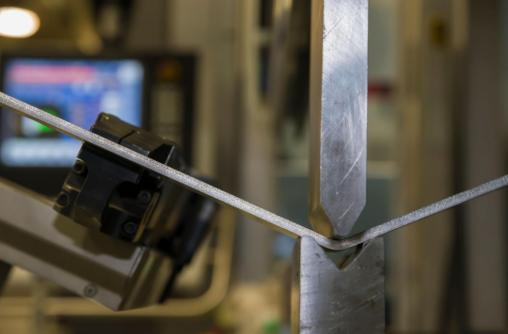
Press Brake Springback: Why Bends Overshoot and How Factories Compensate
Press brake springback is elastic recovery: when the brake releases, the part straightens a few ...
-
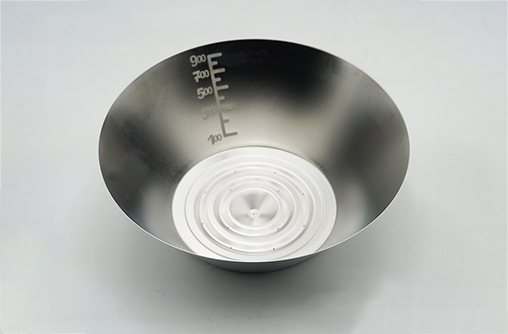
Deep Drawing Sheet Metal: Draw Ratios, Limits & Multi-Hit Setup
Deep drawing sheet metal is a forming operation: a punch pulls a flat blank into a cup or pan sh ...
-

Sheet Metal Gauge Chart: Thickness, Strength & Cost by Gauge
This sheet metal gauge chart is the reference our press engineers use before quoting. Gauge is a ...