

Sheet Metal Gauge Chart: Thickness, Strength & Cost by Gauge
This sheet metal gauge chart is the reference our press engineers use before quoting. Gauge is an inverse number: the higher the gauge, the thinner the sheet. 14 gauge steel is 1.9 mm, 16 gauge is 1.5 mm, 18 gauge is 1.2 mm, and most custom stamped or fabricated parts fall between 0.5 and 3 mm. Aluminum and stainless are often sold by millimeter or by their own gauge scale, so the professional habit is to confirm material and thickness in millimeters on the drawing, every time.
The chart below and the selection logic around it are what we use in Nanpi, and they are the same chart we send to buyers whose drawings say only “14 gauge” without a material.
Read the steel sheet metal gauge chart
The sheet metal gauge chart below covers 3–22 gauge in inches and millimeters, with typical applications for each.
The 14–18 gauge band (1.2–1.9 mm) is where most OEM sheet metal programs live: stiff enough to hold tolerances after bending, thin enough to stamp fast, and cheap enough that material is not the budget line.
Note where aluminum and stainless differ
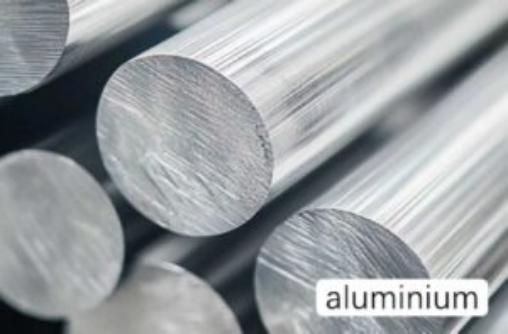
- Aluminum is sold by millimeter or by fraction in fabrication (common stock: 0.5, 1.0, 1.5, 2.0, 3.0 mm). Its “gauge” numbers do not match steel’s, which is the source of many misquoted orders.
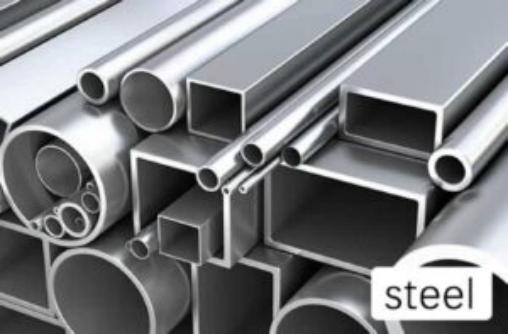
- Stainless uses the same gauge numbers as steel (14 ga = 1.9 mm in 304), but the sheet is stronger per thickness and forms differently — it work-hardens, so thin-gauge stainless bends and draws with more caution.
- As a result, “same gauge, different metal” is not the same part: the bend allowance, the springback, and the tooling all shift. Our material selection guide covers the property side.
Choose thickness by stiffness, not by habit
Three rules do most of the selecting:
- Count the spans. A panel that must stay flat across a 300 mm span wants more thickness than one braced every 100 mm. Doubling thickness roughly octuples bending stiffness.
- Count the bends. Four or more bends in one part call for the thicker end of the range, because each bend zone loses a bit of section.
- Check the load. A part that carries clamping force, suspension, or impact is a structural part — it is selected by stress, not by appearance.
For example, a 1,000 mm floor bracket with 3 bends: 1.5 mm holds the flat parts, but the two load-bearing legs often step up to 2.0 mm. That mixed-gauge design saves weight and cost while keeping the stress where it belongs — and it is exactly the kind of call a DFM review makes before the die is cut. See our tolerance & DFM guide for how the same drawing review handles tolerances.
Factor in what thickness does to cost and forming
- Material cost scales roughly linearly with thickness. A 2.0 mm part uses about 33% more steel than the 1.5 mm version — before anything else changes.
- Cycle time rises with thickness. Thicker sheet needs more tonnage, slower strokes, and bigger presses; on our line the 200–400 ton presses take the 2–3 mm work.
- Forming limits shift. Thin-gauge stainless has a low deep-drawing ceiling — the limits and the multi-hit workaround are in our deep drawing guide.
- Bend quality shifts. Thin sheet burns and wrinkles; thick sheet needs longer air gaps and more springback compensation.
Write the specification right
The line that prevents every dispute:
Material: SS304, sheet 1.5 mm (0.059 in) per ASTM A240, mill certified
Not:
16 gauge stainless
Gauge without material is ambiguous; gauge without standard is unverifiable. Send us either format and we will confirm the exact stock we will cut from — and we reply to inquiries within 2 hours.
FAQ
What is the thickness of 14 gauge sheet metal?
1.91 mm (0.075 in) for steel and stainless — see the sheet metal gauge chart above. For aluminum the gauge number does not apply, so confirm in millimeters.
Which gauge is most common for custom metal parts?
14–18 gauge (1.2–1.9 mm) covers most brackets, enclosures, and frames.
Is higher gauge stronger?
No — higher gauge means thinner sheet, so less stiffness and less strength. Lower gauge numbers are thicker and stronger.
How much does thickness change the part price?
Material cost scales roughly linearly with thickness, and cycle time rises with it, so a 1.5 mm → 2.0 mm step moves the unit price by roughly a third on material alone.
Can I mix thicknesses in one part?
Yes. Mixed-gauge design (thicker at load-bearing features) is standard DFM and usually saves cost versus thickening the whole part.
How do I check the thickness on my received parts?
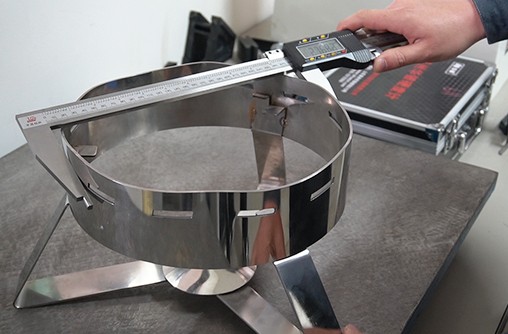
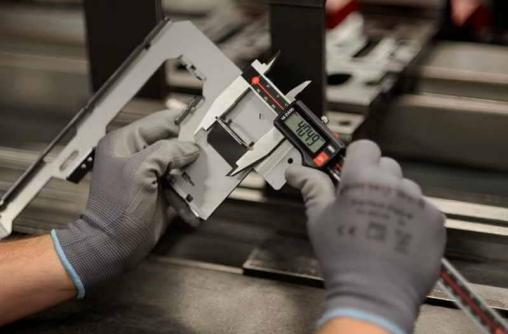
A calibrated micrometer at three points per panel, with the heat number from the mill test certificate. We ship the MTC with every batch.
|
Send the Drawing in Millimeters — Get the Stock Confirmed ✅ Material and thickness confirmed in writing · Mill certificate with every batch · DFM review before quoting
Upload your drawing with the material and thickness in mm — the reply confirms the exact stock, the bend schedule, and the mill certificate you will receive |
📩 Reply within 2 hours · DFM feedback and itemized quote within 24 hours
|
Related Posts
-
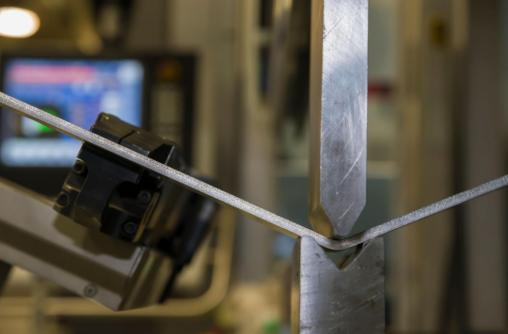
Press Brake Springback: Why Bends Overshoot and How Factories Compensate
Press brake springback is elastic recovery: when the brake releases, the part straightens a few ...
-
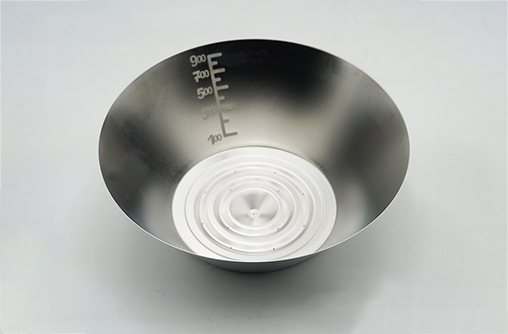
Deep Drawing Sheet Metal: Draw Ratios, Limits & Multi-Hit Setup
Deep drawing sheet metal is a forming operation: a punch pulls a flat blank into a cup or pan sh ...
-
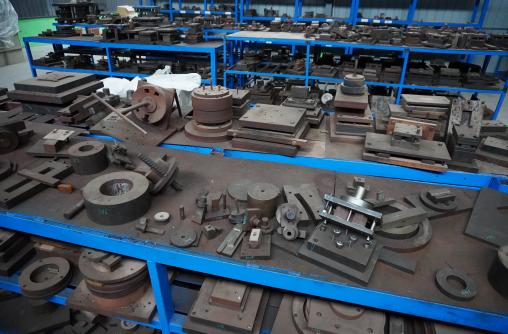
Metal Stamping Die Cost: How Dies Are Made, Lifespan & Maintenance
A stamping die is a precision steel tool that cuts and forms sheet metal in fractions of a secon ...