
Deep Drawing Sheet Metal: Draw Ratios, Limits & Multi-Hit Setup
Deep drawing sheet metal is a forming operation: a punch pulls a flat blank into a cup or pan shape without cracking the wall. The key number is the draw ratio — blank diameter divided by punch diameter. A single hit in mild steel typically survives a draw ratio of about 2.0–2.5 with draw beads; aluminum tolerates a little more; stainless less. Beyond the limit, you do not push harder — you sequence intermediate hits (redraws) that step the diameter down over two or three stations.
Cup, pan, tray, bowl, and deep-pan enclosure programs all run through this arithmetic, and it is the first thing our press engineers check when a drawing arrives. Here is the full logic, the material limits, and the die features that keep the part inside them.
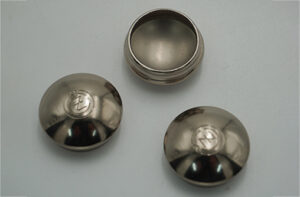
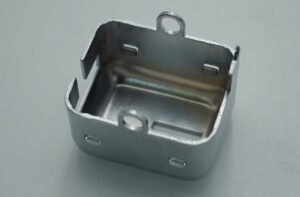
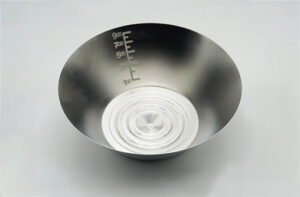
Understand deep drawing sheet metal limits by material
These are rule-of-thumb envelopes for deep drawing sheet metal, not promises: the real limit also depends on blank size, wall-to-bottom-radius, and lubrication. Two drawings at the same ratio can behave differently because one has a generous bottom radius and the other has a tight square corner.
Design within the limits
Five drawing features move a part in or out of single-hit territory:
- Bottom corner radius — the biggest single lever. A radius of 2–3x the sheet thickness keeps the wall from cracking at the punch corner; square-bottomed drawings are where draws die.
- Wall-to-diameter ratio — the deeper the wall relative to the punch, the more the ratio works against you.
- Blank size — a larger flange brings more material into compression, which wants more draw bead control.
- Draw beads — they meter the flange flow in. Too tight and the wall tears; too loose and the flange wrinkles. Bead geometry is tuned in trial, which is why T1 hits exist.
- Lubrication — the specified film and re-application interval are process parameters, not footnotes.
The thickness of the blank sets the whole geometry: thin sheet bends to smaller radii, which helps, but it also lowers the drawing ceiling for stainless. Our gauge chart is the starting reference for that choice.
See how a multi-hit draw is built
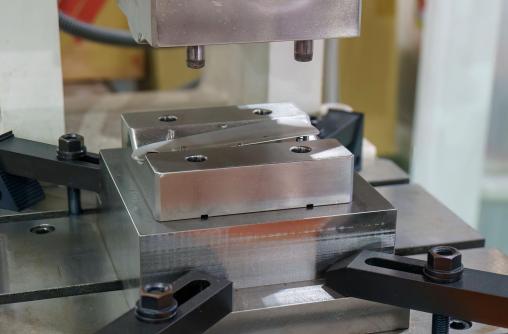 When the ratio exceeds the single-hit envelope, the die architecture steps down:
- Hit 1: preforms the cup to a manageable intermediate diameter.
- Hit 2 (redraw): pulls the diameter down further, usually with the punch rotating the part 90° between stations to spread the thinning evenly.
- Hit 3+ (if needed): final diameter, then trim and punch.
Each added station adds die cost and machine time — the station-count economics are in our stamping die guide — but it is almost always cheaper than splitting the part and welding the halves. On our 80–400 ton press line, multi-hit progressive draws run as one continuous stroke sequence, so the part never leaves the die between hits.
Check the failure modes before you release production
The four classic failures, and where each shows up:
The T1 hit set is where these show up first, and the first-article inspection is the record that proves the draw is stable — our first article inspection guide lists exactly which measurements gate the release.
FAQ
What is a good draw ratio for mild steel in one hit?
About 2.0–2.5 with properly tuned draw beads and a bottom radius of 2–3x sheet thickness. Beyond that, sequence a second hit.
Can you deep draw stainless as easily as mild steel?
No. Stainless work-hardens quickly, so its single-hit ratio sits lower (roughly 1.8–2.2), the beads must be lighter, and lubrication matters more.
Why does my drawn cup crack at the bottom corner?
Usually a bottom radius that is too small for the sheet, or a draw ratio beyond the material’s single-hit limit. Both are fixable — radius first, then an added hit.
What are draw beads for?
They meter the flange flow in. Too little control and the flange wrinkles; too much and the wall tears. Engineers tune bead geometry during die trial.
How many hits does a deep enclosure usually need?
One hit up to a ratio of ~2.3 in mild steel; two hits for typical deep pans; three for very deep or stainless parts. The exact count comes from the DFM review of your drawing.
Who should run the T1 hits — me or the factory?
The factory, with you (or your inspector) present by video. The first-article report from those hits is the release document for mass production.
|
Send Your Cup or Pan Drawing — Get the Draw Ratio Checked ✅ Single-hit or multi-hit recommendation · Material-specific draw limits · T1 samples and first-article report
Upload your drawing with the blank size and target wall depth — the reply names the draw ratio, the hit count, and the die features |
📩 Reply within 2 hours · DFM feedback and itemized quote within 24 hours
|
Related Posts
-
Press Brake Springback: Why Bends Overshoot and How Factories Compensate
Press brake springback is elastic recovery: when the brake releases, the part straightens a few ...
-

Sheet Metal Gauge Chart: Thickness, Strength & Cost by Gauge
This sheet metal gauge chart is the reference our press engineers use before quoting. Gauge is a ...
-
Metal Stamping Die Cost: How Dies Are Made, Lifespan & Maintenance
A stamping die is a precision steel tool that cuts and forms sheet metal in fractions of a secon ...