
Custom Metal Stamping Services: Cost Breakdown and How to Control Costs
Standard parts come with catalog prices. Custom metal stamping services do not, because the price depends on more than the part. Tooling, material utilization, process route, volume, and secondary work all shape the final number. The key question for a buyer is not only who can make the part. It is what drives the cost, and which costs you can control before production. This guide answers both, from the first quote to mass production.
What Custom Metal Stamping Services Really Involve
Every custom stamped part carries three kinds of work. Engineering turns your drawing into a process. Tooling turns the process into a repeatable die. Verification proves the part matches the drawing. Standard parts skip most of this. Custom parts cannot.
| Cost type | What it covers | When it appears |
|---|---|---|
| One-time investment | Tooling design, die manufacture, and tryout | Project start, paid once |
| Repeating cost | Material, press time, secondary work, finishing, inspection, packing | Every batch |
| Service cost | Engineering review, samples, change handling, project coordination | Throughout the project |
The three rows explain most quote surprises. A low piece price can hide a heavy tooling charge. A simple tooling price can hide service costs later. Buyers who compare only the piece price miss the other two rows. A complete quote should make all three visible.
Ask the supplier to map each quote line to one of the three rows. If a line fits nowhere, ask what it covers.
Where the Money Goes in a Custom Stamping Project
Cost does not arrive as one invoice. It follows the project stage by stage, and each stage gives you a different control point.
| Stage | Main cost | What you control |
|---|---|---|
| Drawing finalization and review | Engineering time; rework risk | A complete drawing with clear tolerances |
| Tooling design and manufacture | Die complexity | Consolidated features; realistic tolerances |
| Tryout and samples | Tryout rounds; sample changes | A frozen design before tryout starts |
| Mass production | Material utilization; setup per batch | Committed volume; batch size |
| Delivery | Inspection scope; packing | Agreed inspection level and packing spec |
Two findings matter here. First, decisions in the first two stages shape the cost of every later part. Second, most cost control happens before production, not during it. Many buyers spend most of their energy negotiating after the die is built. By then, much of the total cost is already locked in.
Reopening the design after tooling starts is possible. It is also the most expensive kind of change. Weigh the cost of waiting for a complete drawing against the cost of starting early. In most projects, a finished drawing is cheaper than a fast start.
The stages above sit inside a wider process chain. Our stamping services overview explains how the full flow, from drawing review to delivery, is organized in one plant.
Cost Decisions You Control Before Production
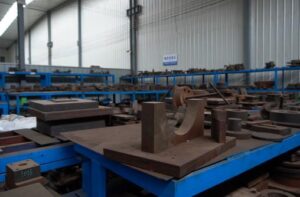
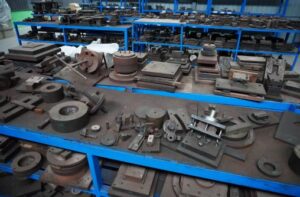
Most cost decisions are made before production. Once the tooling design is released, many cost decisions are already locked in. Review material selection, tolerance requirements, feature complexity, and expected volume before tooling starts. Five decisions in particular shape the number a supplier can offer:
- Complete the drawing. Missing tolerances force assumptions. Assumptions become surprises later.
- Tolerate what you can. Only functional dimensions need tight tolerances. Each tight tolerance adds die and inspection cost.
- Define volume honestly. Tooling amortizes against quantity. An honest annual volume produces a fair piece price.
- Scope the finish. Apply surface treatment only to visible or functional surfaces.
- Choose the process route early. Some features suit stamping. Others need forming or machining. Our sheet metal vs. CNC guide supports that call.
These choices look like engineering details. In a custom project, they are budget decisions. The supplier executes them, but you set them. A few hours of review before the quote often saves more than weeks of negotiation after it.
Align internally before you send anything. Engineering, quality, and purchasing should agree on tolerances, volume, and finish scope. Then send the same brief to three suppliers. Identical briefs produce comparable quotes. Different briefs produce confusion.
How to Read a Custom Stamping Quote
An itemized quote is the first test of a custom metal stamping services supplier. If a supplier cannot break the price down, they cannot explain it later. A clear quote separates at least:
- Tooling cost, listed separately
- Piece price, with the included operations named
- Material, with grade and thickness
- Secondary work and finishing
- Packing and freight, or the trade terms that define them
Hidden Charges to Ask About Upfront
Depending on the supplier and the project, extra charges may appear later:
- Sample and tryout fees
- Change order charges after tooling starts
- Minimum order surcharges
- Inspection report fees
- Tooling storage, when the die stays with the supplier
Ask about each before you commit. None is unreasonable by itself. All of them are surprises if you discover them late.
Comparing Quotes Across Suppliers
Use three questions to make offers comparable:
- Is tooling listed separately, and who owns the die?
- What exactly is inside the piece price?
- What quantity is the quote based on?
Suppliers who answer these questions clearly are easy to compare. Different assumptions explain most price gaps between quotes. Ask the same questions by email. Written answers compare more fairly than phone calls. They also leave a record for later changes.
Two more details deserve a line in every quote. First, the quantity basis: a piece price means little without the assumed volume. Second, payment milestones: tie them to deliverables such as tooling approval, sample approval, and batch release. Written milestones keep both sides honest.
Most suppliers will itemize when asked. The ones who resist usually have a reason worth understanding. If a quote stays a single number, keep asking until it opens up.
Prototype, Tooling, and the Path to Mass Production
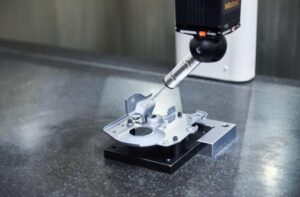
The sample stage has one job: prove the process. A sample that passes dimensional and assembly checks shows the die works. Samples approved before the design is final lock in problems, not solutions.
Before sampling starts, confirm what the sample must prove. Critical dimensions, assembly fit, and surface finish are the usual list. Write that list down before the die is cut, and share it with the supplier. A clear sample target prevents a round of samples that proves the wrong thing.
Sample approval moves the project to the next stage. For projects sampled on production tooling, approval means the die is verified. For projects sampled by laser cutting, soft tooling, or CNC prototypes, you may still need to build production tooling. State the route in the quote and the project plan, whichever applies.
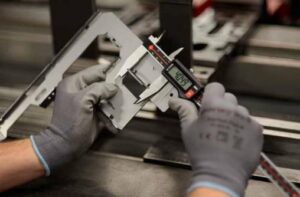
Tryout confirms the die runs steadily. First-article checks confirm that production parts meet the drawing. After that, the batch can run. Each gate is also a cost checkpoint because it catches errors when they are still cheap to fix.
Quality records, such as first-article reports, are agreed upon per project. The scope depends on the part and its application. What matters is that the agreement exists before production, not after.
Production release should be a decision, not a default. Confirm that samples passed, first articles matched, and records are in place. Then the batch runs with a clear baseline. Any later issue is measured against that baseline, which makes it faster to resolve.
Small batches are possible on the same tooling. The economics depend on setup and amortization, as our ISO 9001 and small-batch cost guide explains.
Managing Change Orders During Development
 Design changes during tooling are the most common budget surprise. Each change may touch the die, the samples, and the schedule. Control changes the same way you control the design: in writing.
A change note should state what changed, why, the effect on tooling, the effect on the schedule, and the cost. Both sides approve it before work starts. This sounds administrative. It prevents the most common dispute in custom projects: who approved what, and when.
Keep revision control on the drawing files, too. A supplier that prices changes clearly is a supplier you can budget with.
Our Custom Metal Stamping Services
We are a custom stamping supplier in Nanpi, Hebei, and have served OEM customers since 1999.
We control costs through engineering. We review drawings before tooling. We give DFM suggestions before production. We quote tooling and unit cost separately.
We explain the prototype route before sampling, and flag any differences from the final production route. We price design changes before making them. In our experience, most cost surprises are preventable on the drawing.
FAQ
|
Get a Clear Cost Breakdown Before Tooling Starts ✅ Free engineering review · Itemized quote · 2-hour response
Upload your drawing — get a cost breakdown before tooling starts |
📩 Response within 2 hours · DFM feedback and itemized quote within 24 hours
|
Related Posts
-
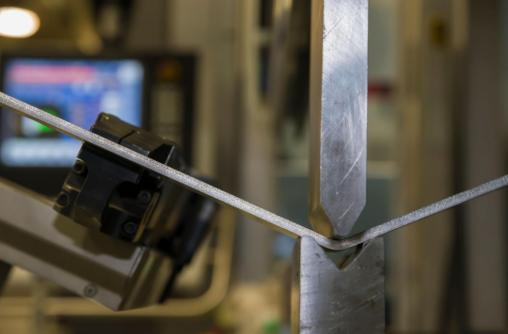
Press Brake Springback: Why Bends Overshoot and How Factories Compensate
Press brake springback is elastic recovery: when the brake releases, the part straightens a few ...
-
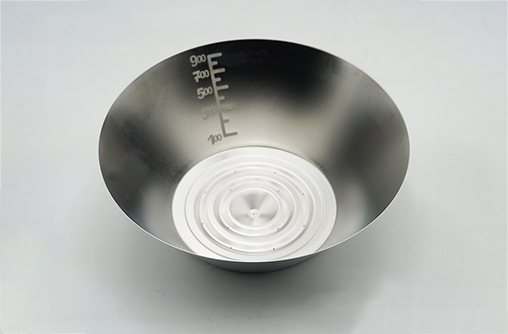
Deep Drawing Sheet Metal: Draw Ratios, Limits & Multi-Hit Setup
Deep drawing sheet metal is a forming operation: a punch pulls a flat blank into a cup or pan sh ...
-

Sheet Metal Gauge Chart: Thickness, Strength & Cost by Gauge
This sheet metal gauge chart is the reference our press engineers use before quoting. Gauge is a ...