
Metal Fabrication Cost Guide: Price per Part, Hour, and KG
Ask ten fabricators to price the same bracket and you will get ten numbers. That spread is normal, because metal fabrication cost is not one price — it is a structure of assumptions. This guide splits that structure into pieces you can check: the three pricing models shops use, the cost each process adds, the five factors that move the number the most, and a grid that reads any quote line by line. So you can budget a part before the first quotation arrives.
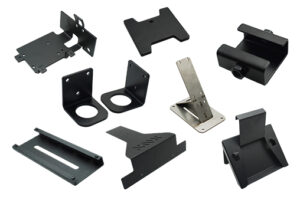
Why the Same Part Gets Ten Different Prices
First, a single price hides four decisions: the material, the route, the precision, and the delivery terms. Change one, and the number moves. For example, the same bracket in A36 mild steel costs a baseline amount. In 304 stainless it typically costs 2.5–3× more for material alone. Also, stainless wants a larger bend radius and a different finish route, so the process lines rise with it. In other words, a quote packs assumptions into one number. Your job as a buyer is to make those assumptions explicit.
Three Ways Shops Price the Work
Because different volumes suit different models, most quotes take one of three shapes.
Ask every supplier to state the model and the quantity behind each unit price. So a “per hour” quote for 5,000 parts and a “per part” quote for 50 parts stop looking comparable. In addition, the metal fabrication cost of a “per part” number depends on the quantity it amortizes — two numbers only compare when model and quantity match.
What Each Process Adds to the Price
Second, break the number into operations. The table below prices each forming and finishing step against a simple laser-cut and bent part as the baseline.
In practice, read the table as a decision tool. Consequently, if your part needs no machined features, you skip that line. Likewise, if a simple powder coat meets the function, you avoid a heavy-duty zinc system. Overall, the cheapest fabrication skips capability on purpose — it does not chase the cheapest labor.
The Five Factors Behind Metal Fabrication Cost
When a price surprises you, one of these five causes it, in roughly this order of impact.
- Material grade. Stainless and alloy steels cost several times mild steel per kilogram. Also, the difference compounds through every downstream step.
- Quantity and route switch. Volume decides laser, stamping, or die. That switch resets the cost structure more than any other input.
- Tolerance tier. Each step from general class to CMM-verified precision adds inspection cost. Our tolerance and DFM guide shows the three-tier method.
- Finish specification. Coating systems differ by multiples in price and cycle time. A vague “painted” spec invites the priciest interpretation.
- Trade term and logistics. FOB versus DDP shifts freight and duty between you and the supplier. For US-bound steel and aluminum in 2026, that line can sit second only to material — see our 2026 US tariffs guide and USTR rate announcements.
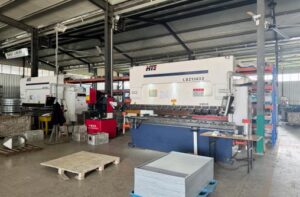
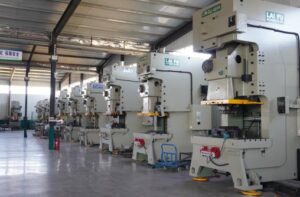
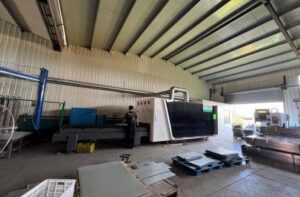
A Grid for Reading Any Quote
Typically, a professional quote separates the lines. The metal fabrication cost grid below turns that structure into a comparison tool across suppliers.
When two quotes differ, walk the grid top to bottom. In most cases one line explains the gap — usually material grade or route. Therefore that line is where negotiation should aim.
Six Levers That Lower Cost Without Lowering Quality
These six moves recover more price than any margin negotiation, because they change the cost structure itself.
- Consolidate parts and quantities across projects, so setup and tooling spread over more units.
- Default tolerances to a general class, and call out only critical dimensions.
- Re-examine the material before you freeze the spec — a painted part rarely needs stainless.
- Simplify the geometry per the DFM rules: fewer tight radii, accessible welds, standard bends.
- Choose the finish by function, matching the coating to the real environment.
- Plan the trade term deliberately, including duty exposure.
Frequently Asked Questions
What does metal fabrication cost per hour, in practice?
Machining and fabrication shops commonly quote 40–120 per hour for prototype and small-batch work. Region, machine type, and setup complexity move the rate. However, volume production usually prices per part instead, because the hourly model overstates repeat operations.
Why do quotes for the same part vary so much between suppliers?
Because a quote reflects more than labor. Material grade, the process path, the tolerance tier, the finish spec, and the trade term all move the number. In practice, two “comparable” quotes assume different defaults. So compare the assumptions, not just the total.
What is the cheapest route for 50 brackets?
For that volume, laser cutting plus press-brake bending usually wins, because no tooling exists. Stamping only takes over at higher volumes, once the die pays back. Also, general-class tolerances and a standard finish keep the price down.
Do thin parts cost less per kilogram?
Not necessarily. Thin sheet uses less material, yet it bends tighter and needs more distortion control. In addition, handling gets more careful below 1 mm. As a result, the processing steps can offset part of the material saving.
Is CNC machining always costlier than laser cutting?
Per feature, usually yes for sheet work, because the laser cuts the whole profile in one pass. However, parts that need machined flatness or tight features after forming take a laser-plus-machining route. That hybrid stays cheaper than machining from solid plate.
How much does quantity cut the unit price?
Unit price falls in steps, not smoothly. First, setup and programming amortize over more parts. Then, the route moves to faster processes once tooling pays back. Overall, flat, nest-friendly parts benefit the most from volume.
|
See Where Your Money Goes — Get a Line-by-Line Quote ✅ Material · Cutting · Forming · Machining · Welding · Finish · Inspection · Freight — separated
Upload your drawing and annual volume — get an itemized quote you can compare across suppliers |
📩 Reply within 2 hours · DFM feedback and itemized quote within 24 hours
|
Related Posts
-
Press Brake Springback: Why Bends Overshoot and How Factories Compensate
Press brake springback is elastic recovery: when the brake releases, the part straightens a few ...
-
Deep Drawing Sheet Metal: Draw Ratios, Limits & Multi-Hit Setup
Deep drawing sheet metal is a forming operation: a punch pulls a flat blank into a cup or pan sh ...
-

Sheet Metal Gauge Chart: Thickness, Strength & Cost by Gauge
This sheet metal gauge chart is the reference our press engineers use before quoting. Gauge is a ...