
Metal Fabrication MOQ and Lead Times: What’s Realistic
Two questions decide whether a fabrication supplier fits your project: the metal fabrication MOQ and the lead time. Both get vague answers — “any quantity,” “it depends” — because the real answers are structured. This guide hands you both structures: realistic minimums by process, typical lead-time windows, and the levers that shorten the time calendar. So you can screen suppliers before the first technical call. First, understand where a minimum comes from.
Why MOQ Follows the Process, Not the Shop
A process needs a minimum only when it carries a fixed cost that must amortize: a die, a mold, a setup. Laser cutting carries no such cost, so one part sets the floor. Stamping carries a big one, so its floor is the quantity that pays the die back. In other words, “what is your MOQ?” really asks “which process do you assume?” The honest answer is a table, not a number.
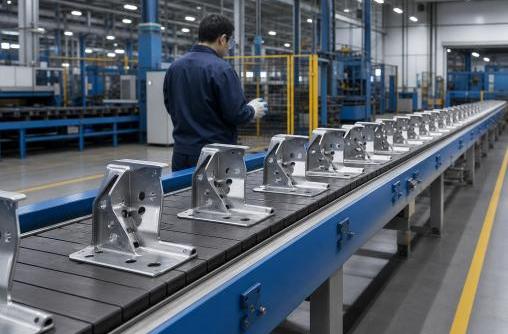
Typical Metal Fabrication MOQ by Process
In practice, the table below works as a screening tool. Values are practical industry minimums for both China-origin and overseas suppliers.
Use the table both ways. If a supplier quotes a stamped route for 500 parts, ask why. Also, if your volume is 30,000 a year and the quote is all CNC, ask for the tooling option and its payback. In the end, the process decision is where the metal fabrication MOQ conversation actually happens.
Typical Lead-Time Windows
Second, anchor your expectations with realistic windows. Your part’s complexity, material stock, and the shop’s queue shift each one.
First, two habits make these windows usable. The first: a date becomes real only after the drawing freezes and the material confirms — a quotation is not a start date. The second: add freight to any delivery math, because the duty step in 2026 carries its own clock (see our tariffs guide).
Five Levers That Shorten the Calendar
- Freeze the drawing early. Post-release changes restart the queue for every affected operation.
- Buy stocked grades. Standard thicknesses of common steels and stainless sit in mill stock. An off-size plate adds a full mill-delivery cycle.
- Overlap prototype and production. Run the first article while production material is on order.
- Approve tooling at design stage. On die routes the tool is the critical path, and early approval buys the most schedule.
- Plan the shutdown window. For China-origin supply, the Chinese New Year slowdown is the year’s largest calendar event. Release Q1 / Q4 orders ahead of the window, or schedule them after the ramp.
Because each lever removes a different segment, stacking two or three usually recovers a week or more — without expediting charges.
MOQ and Cost Are One Conversation
The minimum you can order and the price you pay share the same fixed costs. A laser route carries no metal fabrication MOQ and a higher unit price; a stamped route carries a real minimum and a much lower unit price. The break-even quantity is where the two lines cross. So ask for that number: “at what annual count does the die pay back, and what is the unit price on each side?” Our cost guide explains the pricing models behind the question, and the RFQ checklist shows where the quantity range belongs.
Samples, First Articles, and the Paper Trail
Finally, keep the sample and the first article separate. A sample proves the design fits and functions. A first article inspection proves the production process holds the drawing, dimension by dimension, with records. Volume decisions should follow the FAI, not the sample. Our ISO 9001 guide explains the records behind that statement, and the shipping and delivery guide covers how sample and production shipments travel.
Frequently Asked Questions
What is the metal fabrication MOQ for stamped parts?
Around 1,000 pieces for a single or transfer die, and around 5,000 for a progressive die. Below those numbers the die cost dominates, so the laser-plus-CNC route usually wins on total spend.
How long does a stamping die take?
A simple single-station or transfer die typically needs 4–8 weeks from approved design to first article. A progressive die commonly needs 8–12 weeks or more. So budget die time separately from production time — the die is the critical path.
Can I order just 10 pieces?
Yes, for laser, CNC, and welded work there is no meaningful minimum. For stamped parts, 10 pieces make no economic sense unless a die already exists. If your volume is 10–500, design for laser-plus-CNC and revisit stamping when the count grows.
How long from purchase order to shipment?
Prototype laser parts commonly ship within a week of order release, once material sits in stock. Production weldments and machined parts typically run 2–6 weeks. Stamped parts add the die time before production starts.
Do holidays move my delivery date?
Yes — the Chinese New Year shutdown is the biggest scheduling event of the year for China-origin supply. Factories slow for several weeks before the holiday and ramp after it. So plan any Q1 or Q4 landing against that window, and request the factory calendar with the quote.
Is expediting worth the surcharge?
It is worth it when the schedule risk costs more than the surcharge. Expediting buys queue priority, and sometimes premium material or extra shifts. However, ask what the surcharge actually includes before you accept it.
|
Get Real Numbers on MOQ and Lead Time — Not “It Depends” ✅ Free drawing review · MOQ and lead-time by process · RFQ reply within 2 working hours
Upload your drawing and annual volume — get a process route, MOQ and stage-by-stage lead time |
📩 Reply within 2 working hours · DFM feedback and itemized quote within 24 hours
|
Related Posts
-
Press Brake Springback: Why Bends Overshoot and How Factories Compensate
Press brake springback is elastic recovery: when the brake releases, the part straightens a few ...
-
Deep Drawing Sheet Metal: Draw Ratios, Limits & Multi-Hit Setup
Deep drawing sheet metal is a forming operation: a punch pulls a flat blank into a cup or pan sh ...
-

Sheet Metal Gauge Chart: Thickness, Strength & Cost by Gauge
This sheet metal gauge chart is the reference our press engineers use before quoting. Gauge is a ...