
Aluminum vs Stainless Steel: Which Material Is Better for Your OEM Project?
In OEM manufacturing, one of the most overlooked decisions is the selection of materials: Aluminum vs Stainless Steel. How should one make this choice?
Many purchasing managers tend to choose aluminum at the early stage of a project, and the reasons are quite straightforward: it is lighter, cheaper, and can be processed more quickly.
However, in the 26-year OEM manufacturing project that we were involved in, we observed a very consistent phenomenon:
More than 80% of the post-processing stability issues do not stem from manufacturing errors, but rather from the “cheaper-looking aluminum selection”.
Aluminum vs Stainless Steel: Key Differences Explained
In actual projects, we do not merely focus on the material grade; instead, we assess the material suitability based on its structural behavior and manufacturing performance.
| Comparison Item | Aluminum | Stainless Steel |
|---|---|---|
| Weight | Approximately one-third the weight of stainless steel, making it ideal for lightweight designs. | Heavier, providing greater structural rigidity and stability. |
| Strength | Moderate strength; can be improved by selecting higher-strength alloys (e.g., 6061, 7075). | High mechanical strength with excellent load-bearing capacity. |
| Corrosion Resistance | Naturally forms a protective oxide layer, offering good corrosion resistance in most environments. | Superior corrosion resistance, especially in humid, marine, chemical, and food-processing environments. |
| Machinability | Excellent machinability with faster cutting speeds and lower machining costs. | More difficult to machine, requiring higher cutting forces and more robust tooling. |
| Weldability | Good weldability, though heat distortion should be carefully controlled. | Good weldability; heat input and the heat-affected zone (HAZ) should be properly managed. |
| Surface Finishes | Supports anodizing, powder coating, painting, brushing, and other finishing options. | Common finishes include brushing, polishing, bead blasting, passivation, and electropolishing. |
| Material Cost | Generally lower material cost. | Generally higher material cost. |
| Overall Manufacturing Cost | Cost-effective for medium- to high-volume production where weight reduction is important. | Higher initial manufacturing cost, but often lower lifecycle cost for demanding applications. |
| Typical Applications | Consumer electronics, equipment enclosures, robotics, automotive components, aerospace parts. | Medical equipment, food processing machinery, industrial equipment, outdoor applications, marine components. |
What many people are concerned about is weight, strength, and price.
However, in OEM manufacturing, it is the behavior of the materials during the manufacturing process that truly determines the success of the project, rather than the material parameters themselves.
Manufacturing Differences Between Aluminum vs Stainless Steel
In OEM manufacturing, material differences do not merely exist in the “performance table” but occur throughout the entire processing procedure. There are five key manufacturing stages:
Aluminum: Fast cutting speed, high efficiency
Stainless steel: Requires higher power, but the cutting quality is stable.
👉 Essential Difference: Efficiency vs Stability
Aluminum: Low tool wear and low processing cost
Stainless steel: Higher tool wear rate, longer cycle time
👉 Essential Difference: Cost Control vs Processing Intensity
Aluminum: Has significant rebound, requires compensation.
Stainless steel: Forming is stable, but greater pressure is required.
👉 Essential Difference: Control Difficulty vs. Forming Stability
Aluminum: Susceptible to thermal deformation
Stainless steel: Better dimensional stability
👉 Essential Difference: Risk of Deformation vs. Structural Stability
Aluminum: More dependent on process control
Stainless steel: More stable batch consistency
👉 Essential difference: High dependence on process vs High natural stability
Why Material Selection Problems Often Appear in Mass Production
In real OEM projects, it’s common for everything to seem fine during the sample stage, but problems emerge during mass production. The cause is usually not a manufacturing error, but a more hidden issue:
Samples vs. Mass Production, fundamentally different
Samples are for verifying: Can it be made?
The mass production verification is about: Can it be produced consistently and stably?
Common problems during the mass production stage include: variations in bending rebound between batches, cumulative thermal deformation from welding, gradual expansion of assembly gaps, structural fatigue during long-term use, and a decline in surface treatment consistency. These problems usually do not occur during the prototype stage but gradually emerge after the production volume increases.
The essence of the material selection error is not “choosing the wrong material”, but “underestimating the behavioral changes of the material during mass production”.
OEM Case Study: Why an Aluminum Structure Was Replaced with Stainless Steel
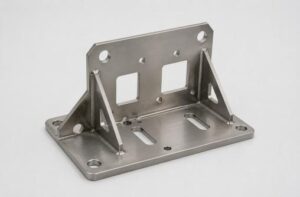
A European manufacturer of industrial automation equipment once sent us a set of drawings for equipment brackets. At the beginning of the project, their goal was very clear: to ensure structural reliability while minimizing overall manufacturing costs. Therefore, they initially chose the 6061 aluminum alloy solution. From a procurement perspective, this choice was very reasonable:
- Lower material costs
- Faster processing speed
- Lighter weight, resulting in lower transportation costs
- Shorter initial delivery cycle
🔍 DFM Review Phase
After receiving the drawings, we did not provide a direct quote; instead, we conducted a DFM review. The focus was not on “material comparison” but on three key issues: whether there is a long-term vibration load, whether there is a repetitive disassembly structure, and whether there are concentrated force points on the threads. The risk of this structure does not lie in “whether it can be done”, but in “whether it can be used stably”.
We divide the risks into three categories:
- Initial 0-6 months:The aluminum structure is completely normal, assembly is without abnormalities, and there are no visible issues.
- Mid-term 6-18 months:Threaded connections begin to show slight wear; vibration causes small gaps to accumulate; and after repeated disassembly and reassembly, accuracy begins to fluctuate.
- Long-term over 18 months:Assembly accuracy deviation increases, maintenance frequency rises, and local structures need to be replaced.
We presented a simple cost model to the client: If the aluminum structure is still used, it is estimated that during the product’s lifecycle, hidden maintenance costs (rework, downtime, and replacement) will increase by approximately 12%-25 %.
We have presented two alternative options:
- Option A: 6061 aluminum alloy (low-cost path) — ✔ Lowest initial cost ✔ Fastest delivery ⚠ Uncontrollable lifecycle maintenance cost ⚠ Risk of long-term stability
- Option B: 304 stainless steel (stability path) — ✔ Higher structural rigidity ✔ More stable anti-vibration performance ✔ Lower lifecycle maintenance cost ⚠ Increased material and processing costs
We offer two sample versions simultaneously and suggest that the customer conduct tests directly in the equipment’s operating environment. During the testing phase, the customer noted a key difference: after repeated disassembly and reassembly of the aluminum structure, the connection status showed slight changes, while the stainless steel remained consistent. The customer ultimately chose the 304 stainless steel solution. The reason was not better performance but rather that the risks were more controllable throughout the life cycle.
Final result: The cost increased slightly, but it is estimated that approximately 12%-25% of long-term maintenance losses were avoided. After mass production, no structural-related rework issues occurred again.
Aluminum vs Stainless Steel Applications by Industry
In actual OEM projects, the selection logic of materials varies significantly across different industries. The following is not a simple “recommendation” but rather an engineering summary based on manufacturing logic.
① The automation equipment industry
Aluminum: Equipment frame, mobile structure, installation plate
Stainless steel: High-load connectors, critical support points
👉 Key Logic: Lightweight vs. Structural Rigidity
② Medical equipment industry
Stainless steel:Suitable for contact with liquids, the human body, or high-frequency cleaning areas.
Aluminum:For non-critical structures such as the casing and brackets
👉 Key Logic: Corrosion Resistance and Cleaning Requirements
③ Food processing equipment
Mainly made of stainless steel (304/316)
Aluminum:Used only for non-contact structures or auxiliary components
👉 Core Logic: Food Safety and Long-Term Corrosion Resistance
③ New energy equipment
Aluminum:Shell, support structure (weight reduction)
Stainless steel: Connectors, fastening structures
👉 Core logic: Weight control + Long-term reliability balance
⑤ Building Hardware Industry
Stainless steel dominates.
Aluminum:Decorative or light-load structure
👉 Key Logic: Outdoor Environmental Durability
⑥ Automotive Components Industry
Aluminum:Lightweight structural components
Stainless steel:Durable connectors, fasteners
👉Core logic: System balance between performance and weight
Industry Summary:The best material is not the one with the highest specifications, but the one that best fits the application’s functional, manufacturing, and cost requirements.
How We Help Customers Select the Right Material
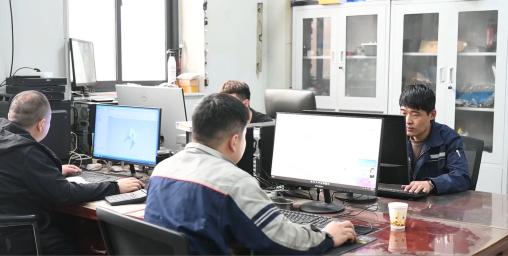
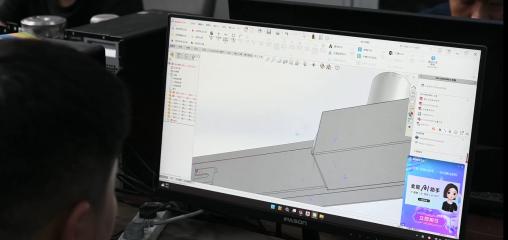
| After receiving the drawings, our first step is not to provide a quotation, but to conduct a manufacturability analysis (DFM). Because many material issues can actually be identified before production begins. Our engineering team usually focuses on evaluating the following aspects:
• Is the force applied to the product reasonable? After completing these analyses, we will recommend a more suitable material based on manufacturing experience rather than on material parameters alone. |
|
Why Different Manufacturers Recommend Different Materials
Many purchasing personnel will find that for the same drawing, different suppliers offer different material suggestions. The reason is usually not a difference in engineering judgment, but a difference in manufacturing capabilities.
If a factory has only laser-cutting capabilities, it is more likely to recommend materials that are easy to cut. If welding relies on outsourcing, it may try to avoid complex welding structures. If there are no mature surface-treatment resources, this may also limit the choice of materials. Therefore, the materials recommended by the supplier are sometimes not the most suitable for the product, but rather the ones best suited to their own processing conditions.
This means that we can assess whether the material is truly suitable for your project from the perspective of the entire manufacturing process, rather than just a single step.
Why Manufacturing Experience Matters More Than Material Specifications
The material data can be found in the manual, but engineering experience cannot be replicated. Over the past 26 years, we have participated in numerous OEM projects across Europe, North America, and Asia. We have accumulated extensive manufacturing experience across industries such as consumer electronics, industrial equipment, automation, healthcare, and new energy. One core insight these projects ultimately brought us is that the correctness of material selection depends on understanding the “entire manufacturing system” rather than the performance of a single material.
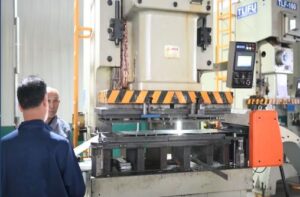
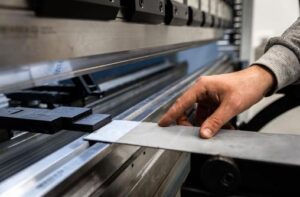
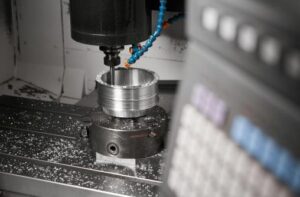
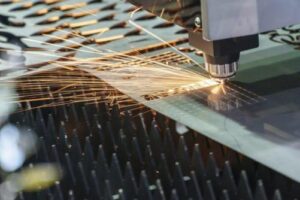
We do not merely offer processing services; instead, we provide a complete manufacturing closed loop:
• A team of 19 engineers with over 10 years of experience, providing free design optimization, responsible for DFM review and material selection suggestions;
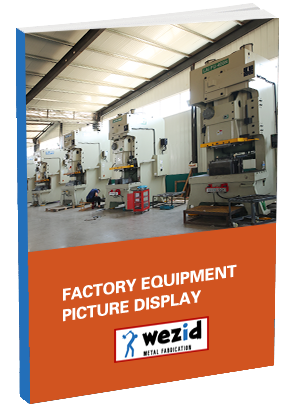
• A modern production base of 9,000 m², enabling one-stop manufacturing from prototyping to mass production;
• A complete manufacturing capability of 80-400 ton presses (40 units), 2 sets of 6KW laser cutting, 3 bending machines, 1 automatic spot welding machine, 2 five- axis machining centers, 2 surface treatment lines, 2 sets of coordinate measuring machines (CMM), etc.;
• Adhering to the strict ISO 9001:2015 international quality management system certification ensures consistency across different product batches.
Our value is not just having complete equipment, but being able to make early judgments at the DFM stage: whether this material will fail during mass production.
Many material suggestions are not derived from theory, but come from our over 70,000+ OEM part manufacturing experience.
Get a Material Selection Recommendation for Your Project✅ Aluminum vs stainless steel evaluation · DFM review · Stability analysis
Upload your drawings for a free material selection & system capability evaluation |
📩 Response within 2 hours · DFM feedback and quotation within 24 hours
|
Related Posts
-
Press Brake Springback: Why Bends Overshoot and How Factories Compensate
Press brake springback is elastic recovery: when the brake releases, the part straightens a few ...
-
Deep Drawing Sheet Metal: Draw Ratios, Limits & Multi-Hit Setup
Deep drawing sheet metal is a forming operation: a punch pulls a flat blank into a cup or pan sh ...
-

Sheet Metal Gauge Chart: Thickness, Strength & Cost by Gauge
This sheet metal gauge chart is the reference our press engineers use before quoting. Gauge is a ...