
Aluminum Fabrication: The Ultimate Guide to Design, Manufacturing and Supplier Selection
In the aluminum fabrication project, a very common yet often underestimated phenomenon is that the outcome can vary significantly from one supplier to another, even for the same drawing. What’s more crucial is that such differences usually do not surface during the sample stage.
And this issue is often only discovered when the project has reached an irreversible stage.
Why Design Matters in Aluminum Fabrication
In the processing of aluminum materials, most production issues do not arise during manufacturing. Still, they are “pre-written into the structure” during the design stage. In actual projects (based on over 70,000 metal parts manufacturing experience), the design factors that affect the stability of mass production usually include:
- Bending structure Is it suitable for repeated production?
- Position of holes and spacing Are they reasonable (is there any stress concentration)?
- Has the rebound property of the aluminum material been considered?
- Tolerance Is it suitable for mass production?


The Aluminum Fabrication Process: From Drawing to Mass Production
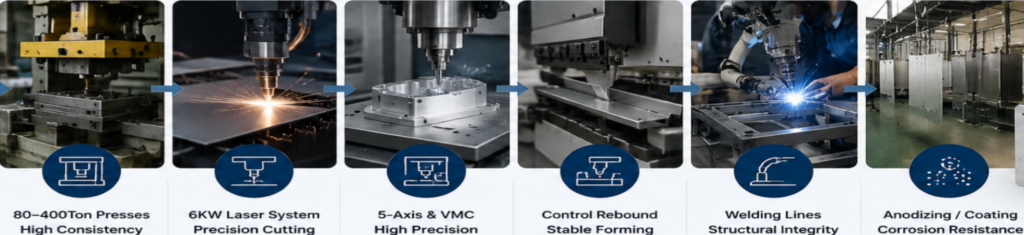
The essence of aluminum material processing is not a single process, but rather a “systematic manufacturing process”. In a manufacturing system of 9,000 m², a part typically undergoes the following complete process:
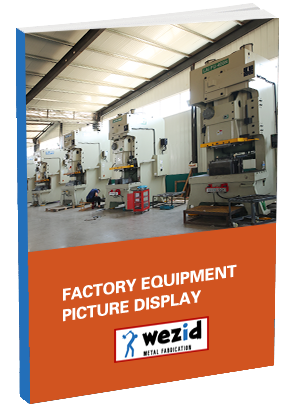
80–400 ton stamping equipment (38 units), establishing the most critical source of structural consistency for mass production
6KW laser cutting system, establishing basic geometric accuracy, controlling initial size error
Five-axis / vertical machining center, controlling assembly relationships, functional interface accuracy, and multi-process error compensation
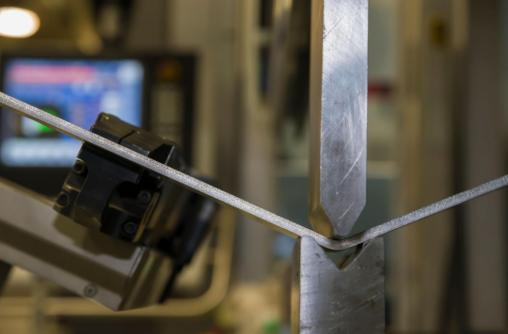
Control the aluminum’s rebound to ensure consistent rebound across products.
3 sets of welding production lines + automatic spot welding. Key risk: cumulative effect of thermal deformation in batches.
Anodizing or coating determines the appearance consistency, corrosion resistance stability, and batch visual consistency.
Why Successful Samples Can Still Fail in Mass Production
In actual projects, the sample stage is usually the “most prone to misjudgment” stage. The reason is that the sample is in a single-item state, while mass production is in a repetitive state. The sample can be made qualified through manual correction, but mass production relies on system stability.
Typical phenomena include: initial stability → mid-term normality → later gradual deviation.
What Makes One Aluminum Fabrication Supplier Better Than Another?
In the processing of aluminum materials, the differences among suppliers usually do not become apparent at the sample stage but are magnified at the batch stage. The true differences lie in three aspects:
- ✔ ① Different levels of understanding of the design
Low-level suppliers focus on: “Can it be made?”
High-level suppliers focus on the question: “Is it suitable for long-term, stable mass production?”
- ✔ ② Different manufacturing path selection
The same part may have different paths: a CNC-dominant path vs. a stamping + forming path. Different paths result in completely different stability levels. - ✔ ③ Different system stability capabilities
What truly makes the difference is not the equipment itself, but whether errors across multiple processes are effectively and consistently controlled, including the consistency of molding, the control of welding deformation, the control of error propagation during processing, and the consistency of surface treatment.
And the gap in system capabilities often cannot be fully identified at the sample stage.
How to Choose the Right Aluminum Fabrication Supplier
In actual projects, reliable suppliers usually possess three core capabilities:
- ✔ Design comprehension ability — Whether one can understand the components from a structural perspective rather than merely following the drawings.
- ✔ Mass production capability — Whether one possesses a long-term, stable, and repeatable production capacity rather than just a sample production capability.
- ✔ System manufacturing capability — Whether one can control the cumulative errors between different processes.
Can it be guaranteed that the quality of the first product will be the same as that of the first 10,000 products?
If the answer to this question cannot be provided, then the qualification of the sample does not have any decision-making significance by itself.
Key Takeaways
A single step does not determine the outcome of aluminum material processing. Still, it is the result of the combined effect of three steps:
- Design determines the structural foundation
- Manufacturing determines the implementation capability
- Suppliers determine the stability
Any deficiency at any step will be magnified during mass production.
Request a Quote for Your Aluminum Fabrication Project✅ System capability · Batch consistency · Long-term stability
Upload your drawings for a free system capability evaluation & quote. |
📩 Response within 2 hours · DFM feedback and quotation within 24 hours
|
Related Posts
-
Press Brake Springback: Why Bends Overshoot and How Factories Compensate
Press brake springback is elastic recovery: when the brake releases, the part straightens a few ...
-
Deep Drawing Sheet Metal: Draw Ratios, Limits & Multi-Hit Setup
Deep drawing sheet metal is a forming operation: a punch pulls a flat blank into a cup or pan sh ...
-

Sheet Metal Gauge Chart: Thickness, Strength & Cost by Gauge
This sheet metal gauge chart is the reference our press engineers use before quoting. Gauge is a ...