
304 vs 316 Stainless Steel: Which Grade Should You Choose for Your Application?
In the manufacturing of 304 vs 316 stainless steel components, what seems to be merely a difference in material selection often determines:
- ✔ Will the product corrode prematurely?
- ✔ Will it cause batch quality issues?
- ✔ Will it lead to later maintenance or customer claims?
- ✔ Will it affect the overall project cost structure?
304 vs 316 Stainless Steel: Key Engineering Comparison
📊 Quick Engineering Overview
| Property | 304 Stainless Steel | 316 Stainless Steel |
|---|---|---|
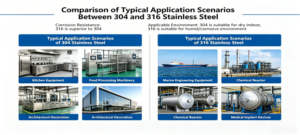
| Corrosion Resistance | Good in general environments | Excellent in marine & chemical environments |
| Cost | Lower material cost | Higher (contains Molybdenum Mo) |
| Formability | Excellent for stamping & deep drawing | Slightly higher work hardening |
| Welding Performance | Stable and widely used | More sensitive to heat input |
| Mass Production Suitability | Highly suitable for batch production | Suitable but requires tighter process control |
| Typical Applications | Indoor, general industrial parts | Coastal, marine, chemical environments |
👉 Core understanding: 304 stainless steel prioritizes cost-effectiveness and manufacturability. In contrast, 316 stainless steel is designed for higher corrosion resistance and long-term durability in aggressive environments.
304 vs 316 Stainless Steel: Real Engineering Risks and Trade-Offs
In actual projects, the differences between 304 and 316 usually do not become apparent at the initial stage but gradually emerge during use.
⚠️ Engineering risks of 304
(When selecting the wrong environment)
- Local pitting gradually expands
- Welding areas are prone to corrosion
- Surface rust spots appear in the middle and later stages
- Uneven lifespan of batch parts
👉 Initially normal, but then a concentrated outbreak occurs later.
📉 The engineering cost of 316
(When over-selecting)
- Material costs increase
- The stamping process becomes more difficult
- Mold wear increases
- Batch efficiency decreases
👉 Costs and manufacturing efficiency losses
How to Choose Between 304 vs 316 Stainless Steel
Why Stainless Steel Parts Fail Even With the Right Material
In metal fabrication projects, it is common that failures still occur even when the correct stainless steel grade is selected.
This is usually caused by:
- Improper stamping or forming design
- Insufficient control of welding heat input
- Lack of consistency in batch production
- Underestimated environmental exposure conditions
How Engineering Support Improves Stainless Steel Fabrication Quality
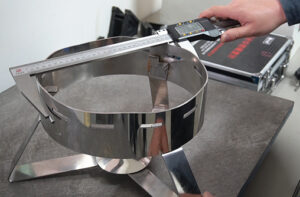
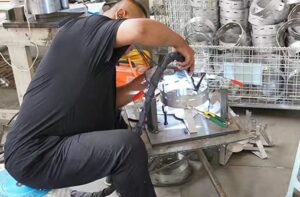
In long-term stainless steel parts manufacturing, we provide not only fabrication services, but also engineering-level support for material selection and process optimization.
- ✅ Stainless steel grade selection support (304 / 316 / alternative grades)
- ✅ Design for Manufacturability (DFM) analysis
- ✅ Stamping and forming process optimization
- ✅ Batch production consistency control
We have provided stainless steel component manufacturing services for multiple industries, including:
Industrial equipment components · Outdoor structural metal parts · Precision mechanical components · Corrosion-resistant stainless steel assemblies
👉 Over 70,000+ metal parts manufacturing experience cases in different industrial applications.
Conclusion: Material Selection is Risk Management, Not Just Comparison
In 304 vs 316 stainless steel selection, there is no absolute “better material”—only the most suitable engineering choice.
🔩 304 stainless steel → Cost-efficient, ideal for general industrial and stable mass production
⚙️ 316 stainless steel → Higher corrosion resistance, suitable for harsh environments and long-term applications
👉 FFinal engineering principle:Successful stainless steel parts fabrication depends on how well material, structure, and manufacturing process are matched together—not just material properties alone.
Get Engineering Support for Your Stainless Steel Project✅ 304/316 selection guidance • DFM optimization • Batch consistency
Contact us today for a free material selection review & quote. |
📩 Response within 2 hours · DFM feedback and quotation within 24 hours
|
Related Posts
-
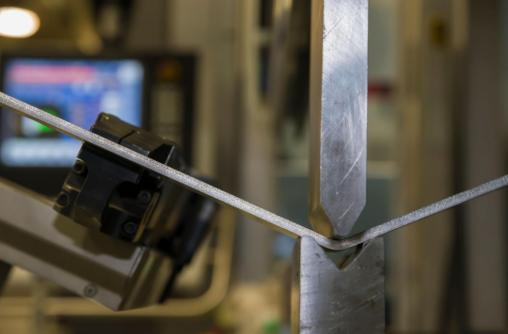
Press Brake Springback: Why Bends Overshoot and How Factories Compensate
Press brake springback is elastic recovery: when the brake releases, the part straightens a few ...
-
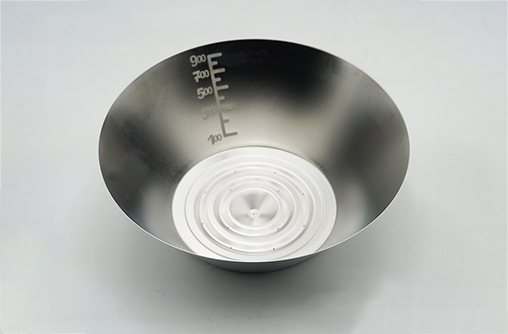
Deep Drawing Sheet Metal: Draw Ratios, Limits & Multi-Hit Setup
Deep drawing sheet metal is a forming operation: a punch pulls a flat blank into a cup or pan sh ...
-

Sheet Metal Gauge Chart: Thickness, Strength & Cost by Gauge
This sheet metal gauge chart is the reference our press engineers use before quoting. Gauge is a ...