
Why the Wrong Sheet Metal Finish Can Ruin a Perfect Part
A sheet metal part can have correct drawings, proper dimensions, materials that meet requirements, and a complete assembly. However, after being in use for several months, problems such as rusting, blistering, or accelerated corrosion may still occur. In many OEM projects, the problem does not come from the manufacturing process, but rather from the sheet metal finish not matching the actual usage environment from the very beginning.
Many people consider sheet metal finishing the final step, merely to enhance appearance. However, in engineering, it directly determines the corrosion resistance and long-term reliability of the parts.
A wrong choice of surface treatment can cause an otherwise flawless part to fail prematurely.
Why Surface Finish Is an Engineering Decision, Not Just an Appearance Choice
When many purchasing and design personnel first discuss surface treatment, their main concerns tend to be:
• What color should it be sprayed?
• Does the surface look good?
• What is the cost?
But what the engineers really care about is:
The surface treatment determines the product’s ability to withstand real-world environments.
-300x197.jpg)
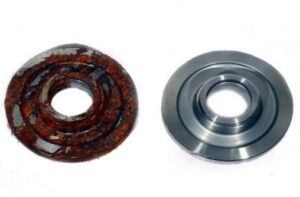
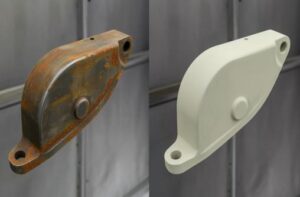
- Corrosion resistance – Can it withstand moisture, salt fog, and chemical media?
- Wear resistance – Will it still function after long-term friction?
- Weather resistance – Will ultraviolet rays, temperature fluctuations, and outdoor conditions accelerate aging?
- Conductivity and insulation – Do electrical components meet functional requirements?
- Assembly accuracy – Does the coating thickness affect the fit clearance and threads?
6 Engineering Questions Before Selecting Sheet Metal Finishes
A truly experienced engineer would not immediately recommend “spraying powder” or “galvanizing”. Instead, they usually start by answering the following questions:
Choosing the Right Sheet Metal Finish for Different Applications
At this point, it becomes clear that selecting a sheet metal finish is not a matter of preference, but a structured engineering decision based on application conditions.
Why Many OEM Projects Choose the Wrong Sheet Metal Finish
The real problem is usually not “not being able to do it”, but rather “neglecting key conditions when making decisions”.
Case Study: How an Engineering Review Prevented Long-Term Corrosion
An OEM customer developed an industrial control box. The design required the use of ordinary powder coating. Since the product was initially planned for indoor installation, this solution could meet the anti-corrosion requirements; thus, the sample stage was successfully verified.

As the project progressed, the client confirmed that the product would be installed in an industrial area along the coast, where it would be exposed to high humidity and salt spray for an extended period. At the same time, the client hoped to maintain the original design as much as possible to avoid increasing manufacturing costs and affecting the project schedule.
Although the structure, materials, and dimensions of the parts have remained unchanged, the engineering team believes that continuing to use the standard powder coating process will make it difficult to meet the requirements of the new usage environment and the product’s expected lifespan.
During the DFM engineering review, we reanalyzed the installation environment, the risk of salt-fog corrosion, the expected service life, and the subsequent maintenance costs, and evaluated the long-term performance of different surface treatment options.
After a comprehensive assessment, we recommend optimizing the pre-treatment process and upgrading the surface treatment system before mass production, rather than continuing to use the original standard powder spraying method. Although the new solution will increase the initial manufacturing cost, it can reduce long-term corrosion, rework, and maintenance risks and better meet the customers’ requirements for product reliability.
After the engineering assessment and communication, the client finally adopted this suggestion and completed the adjustment of the surface treatment plan before mass production.
The design remained unchanged, but the required surface finish changed because the engineering requirements had changed.
This example highlights an important principle: selecting a sheet metal finish is not about choosing a coating process—it is about matching engineering requirements with real operating conditions.
Reliable Sheet Metal Finishes Require a Reliable Manufacturing System
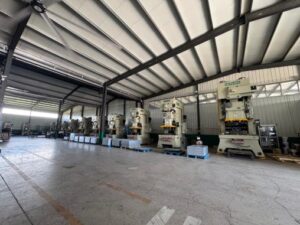

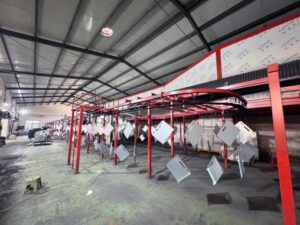
A reliable sheet metal finish is not determined only in the coating stage. It is influenced by the entire manufacturing process, including cutting accuracy, forming stability, welding conditions, surface preparation, and inspection control.
That is why finish performance must be evaluated as part of a complete manufacturing system rather than a single process decision.
Our Manufacturing and Engineering Capabilities
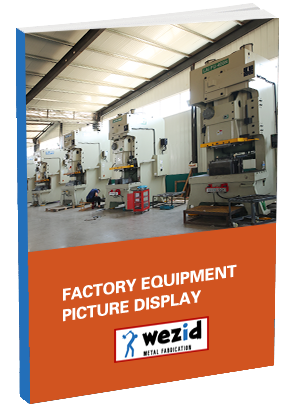
Explore our manufacturing equipment to see how our integrated production system supports consistent quality.
Choosing the Right Sheet Metal Finish Starts with Engineering
Most failures in sheet metal parts are not caused by manufacturing defects, but by a mismatch between surface finish, material, geometry, and real operating conditions.
A reliable sheet metal finish is never a late-stage decision—it is defined at the engineering stage, validated in manufacturing, and confirmed in real-world application.
Get the Right Surface Finish for Your OEM Project✅ Environment-based selection · Material compatibility · Long-term reliability
Many surface finish failures come from early-stage selection errors. Upload your drawings for a professional finish recommendation. |
📩 Response within 2 hours · DFM feedback and quotation within 24 hours
|
Related Posts
-
Press Brake Springback: Why Bends Overshoot and How Factories Compensate
Press brake springback is elastic recovery: when the brake releases, the part straightens a few ...
-
Deep Drawing Sheet Metal: Draw Ratios, Limits & Multi-Hit Setup
Deep drawing sheet metal is a forming operation: a punch pulls a flat blank into a cup or pan sh ...
-

Sheet Metal Gauge Chart: Thickness, Strength & Cost by Gauge
This sheet metal gauge chart is the reference our press engineers use before quoting. Gauge is a ...