
Custom Metal Fabrication vs Standard Manufacturing: Not All Parts Are Made the Same
In manufacturing metal components, choosing the wrong production method may limit product design and increase the cost of subsequent adjustments. While both custom metal fabrication and standard manufacturing can produce metal parts, they employ different manufacturing logic, which directly affects product development and subsequent production.
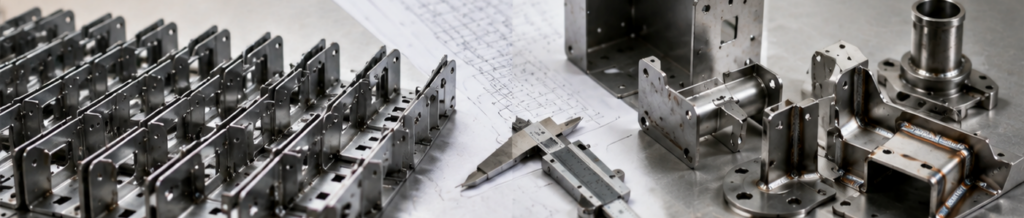
For OEM enterprises, manufacturing a part is only the first step. The more important challenge is selecting a production method that matches the product’s characteristics and long-term supply requirements.
Why Does Standard Manufacturing Work for Some Metal Parts?
The core advantage of standard manufacturing lies in repetitive production and efficiency optimization. When the part design is stable, the size requirements are fixed, and long-term batch production is needed, the standardized production method can provide high production efficiency and cost advantages.
Standard manufacturing usually has the following characteristics:
The efficiency of mass production is high.
The unit cost can be reduced more easily.
It is suitable for large-scale production of mature products.
For instance, for some metal parts with simple structures, uniform specifications, and long-term stability requirements, adopting standard manufacturing methods can improve production efficiency.
However, standard manufacturing relies on stable and fixed production conditions. When product designs keep changing, or when parts have special structures and manufacturing requirements, the standardized process may struggle to meet actual needs.
Why do Some Products Require Custom Metal Fabrication?
Standard manufacturing advantages depend on one condition: the product design, production requirements, and manufacturing processes must already be mature and stable.
However, the main problem with many OEM projects lies in:
The problems in many OEM projects do not lie in the inability to manufacture the parts, but rather in the fact that fixed production methods cannot be applied directly.
For example:
• The parts need to be adapted to specific installation environments, and standard sizes cannot meet actual applications;
• The product needs to meet structural, functional, and assembly requirements simultaneously, and a single production process is difficult to cover all aspects;
• The product needs continuous optimization, and the manufacturing plan needs to be adjusted to meet demand.
These projects require not only processing capabilities but also a manufacturing plan that can be adjusted to meet product requirements. This is why professional custom metal fabrication suppliers need to provide more support in design, manufacturing processes, and production stability.
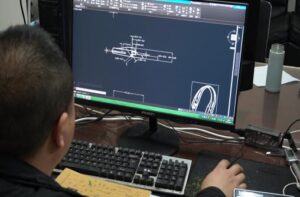
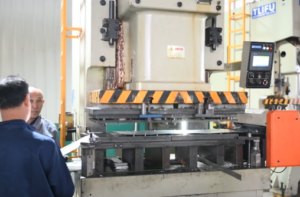
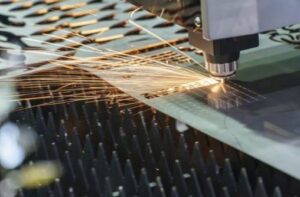
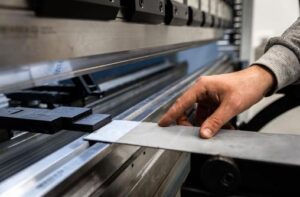
Why Some OEM Parts Need a Customized Manufacturing Approach
Many OEM projects may not seem complicated at the drawing stage. Therefore, customers prefer to adopt mature production methods wherever possible to shorten the development cycle and control manufacturing costs.
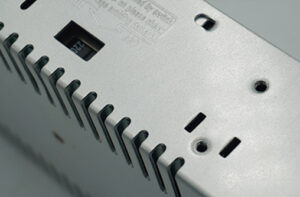
An industrial equipment metal casing component project
The customer expects this part to meet the installation size requirements while also considering structural strength, production cost, and subsequent mass-production supply.
From the drawings, it appears to be a conventional sheet-metal part that can be fabricated through cutting, bending, and welding. The existing production process can be directly adopted.
However, during the trial production assessment, the manufacturing team discovered that if the existing production method were adopted directly, although processing could be completed, it would be difficult to simultaneously meet the product’s assembly requirements, production efficiency, and the stability of subsequent batches.
The problem lies not in the inability to manufacture the parts, but in the current manufacturing plan not being the most suitable for this product.
Therefore, before officially commencing production, the manufacturing plan was re-planned, including:
After the adjustment, this part successfully entered stable mass production and reduced the adjustment work in subsequent production.
The value of custom metal fabrication lies not in adopting more complex processing methods, but in establishing a manufacturing plan better suited to the product when the product requirements do not fully align with existing production methods.
Custom Metal Fabrication vs Standard Manufacturing: Key Differences
The difference between custom metal processing and standard manufacturing does not merely lie in the processing methods; rather, it lies in whether the manufacturing process can be adjusted to meet product requirements.
In simple terms, Standard Manufacturing aims to replicate existing products using established processes efficiently. At the same time, Custom Metal Fabrication focuses on developing more appropriate and stable manufacturing methods tailored to the specific requirements of different products.
Custom Metal Fabrication — Built for Your Product✅ Custom engineering · Flexible manufacturing · Stable batch delivery
Submit your drawings. Our engineering team will evaluate your manufacturing approach and provide custom fabrication recommendations. |
📩 Response within 24h — Manufacturing assessment & quotation
|
Related Posts
-
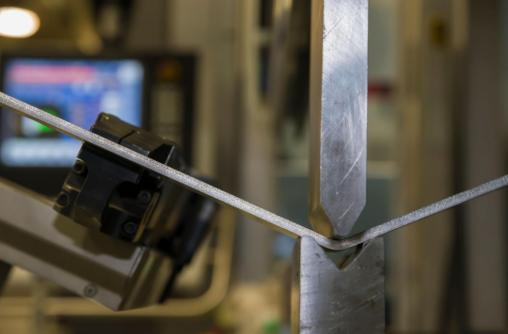
Press Brake Springback: Why Bends Overshoot and How Factories Compensate
Press brake springback is elastic recovery: when the brake releases, the part straightens a few ...
-
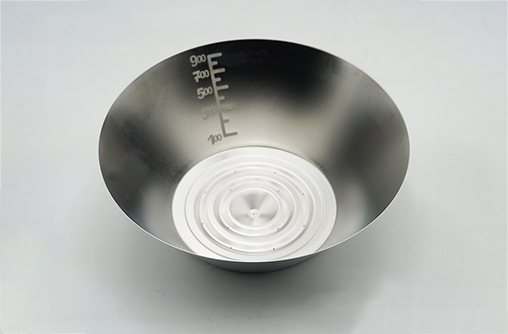
Deep Drawing Sheet Metal: Draw Ratios, Limits & Multi-Hit Setup
Deep drawing sheet metal is a forming operation: a punch pulls a flat blank into a cup or pan sh ...
-

Sheet Metal Gauge Chart: Thickness, Strength & Cost by Gauge
This sheet metal gauge chart is the reference our press engineers use before quoting. Gauge is a ...