
How Sheet Metal Design Optimization Reduces Metal Fabrication Costs
Sheet metal design optimization plays a key role in reducing manufacturing costs in metal fabrication.
In industrial sheet metal manufacturing, the cost structure of a product from design to mass production is not determined by the processing stage, but by whether the structural design conforms to manufacturing logic.
Many projects seem feasible during the design stage. Still, when they enter mass production, problems such as insufficient material utilization, unstable processing cycle, and reliance on manual assembly gradually emerge.
The key to cost control lies in the design stage, not in production.
What is Sheet Metal Design Optimization?
Sheet metal design optimization is an engineering approach that improves manufacturability by adjusting the product structure at the design stage to better align with fabrication and mass-production requirements.
It focuses on:
• improving material utilization
• simplifying manufacturing processes
• reducing assembly complexity
• increasing batch production stability
The core principle is to adapt design to manufacturing systems, not force manufacturing to compensate for design issues.

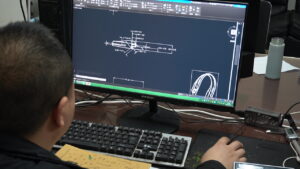
Main Cost Drivers in Sheet Metal Manufacturing
In actual production, cost issues in sheet metal manufacturing are from the systematic impact of multiple manufacturing processes:
• Insufficient material utilization (waste in layout and arrangement)
• Complex processing paths (excessive number of bending and positioning operations)
• Manual adjustment for assembly (lack of structural guidance)
• Unstable batch consistency (deformation and cumulative errors)
These issues are often hidden in prototype production but become amplified during mass manufacturing.
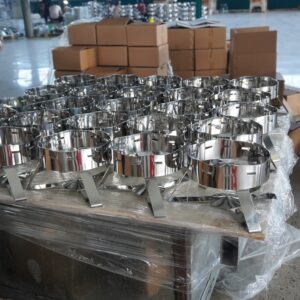
📌 Stainless Steel Heating Stove Housing
This project involves designing the outer shell of a stainless steel heating stove, with strict requirements for structural strength and batch consistency.
Initial manufacturing issues:
- The utilization rate of the open structure is insufficient.
- unstable cycle time due to complex bending geometry
- deformation risk in localized welding zones
- manual alignment required during assembly
- inconsistent results across production batches
👉 Core issue: this reflects a mismatch between structural design and batch manufacturing logic.
How Engineering Optimization Improves Manufacturing Performance
Sheet metal design optimization does not solve isolated issues.Instead, it restructures the design logic to improve the entire production system.
1. Structural Logic Optimization
By optimizing the structural design logic and reducing unnecessary complex processing paths and repetitive operations, minimizing variability from the source.
2. Manufacturing Process Alignment
Improves coordination between cutting, bending, welding, and assembly to ensure consistent production flow.
3. Batch Stability Enhancement
Controls deformation-sensitive areas and reduces cumulative tolerance errors to ensure consistent mass production results.
👉 Core shift: from “fixing problems” to “optimizing the system”.
Our Engineering Capabilities in Sheet Metal Design Optimization
Through sheet metal design optimization and DFM (Design for Manufacturing) methods, manufacturing risks can be identified and optimized at the design stage, thereby enhancing the overall manufacturability.
👉 Learn more about our sheet metal design optimization services
✔ Risk Control during the Design Phase
Based on the DFM approach, potential manufacturing risks are identified and eliminated at the design stage, ensuring the product’s manufacturability.
- Structural deformation and stress risks
- Bending and welding feasibility issues
- Batch production consistency risks
- Assembly efficiency and positioning problems
✔ Manufacturing logic optimization
Optimize the design at the structural level to make the product more compatible with the manufacturing system, and reduce waste and fluctuations at the source.
- Improve the material utilization rate
- Simplify processing paths
- Optimize assembly structure logic
- Enhance batch stability
✔ Engineering Support Services
Provide comprehensive engineering support throughout the entire process from evaluation to mass production, ensuring that the design is successfully transformed into a production outcome.
- Manufacturability assessment
- Manufacturing logic optimization
- Process path recommendation
- Batch stability optimization
Conclusion
Manufacturing cost in sheet metal production is not driven by machining capability, but by whether the design aligns with manufacturing logic.When design, process, and assembly are optimized as a unified system, manufacturing efficiency improves, and costs decrease consistently during mass production.
📐 DFM & Engineering Support
If your project is entering the design or pre-production stage, we can provide sheet metal design optimization and DFM engineering evaluation to identify manufacturability risks early and improve batch production stability.
Related Posts
-
Metal Stamping Services: How a Full-Service Supplier Delivers Your Drawings
Metal stamping services are more than pressing sheet metal into a shape. For a buyer, the real s ...
-
ISO 9001 Certified Sheet Metal Fabricators: Does Certification Reduce Your Total Cost?
An ISO 9001 certified sheet metal fabrication manufacturer’s quote is not necessarily the ...
-
Sheet Metal Fabrication vs CNC Machining: How to Choose
Both processes produce metal parts, but they start from different material forms and add cost at ...