
What Separates a Reliable Metal Fabrication Company from an Average Supplier?
What kind of Metal Fabrication Company can truly guarantee the success of mass production? Why do many projects “pass the sample test but ultimately fail”?
In metal processing projects, a common but easily misjudged phenomenon is as follows: The project usually progresses smoothly in the early stage – samples pass, quotations are reasonable, communication is smooth, and delivery deadlines are clear. However, the real problems often arise in the later stage: the first batch is normal, but the second batch starts to deviate, batch consistency declines, and the delivery cycle gets out of control.
Many purchasers eventually come to believe: “It’s the supplier’s fault.”
But the truth is: ❗ Risks never arise later on; they have always been present from the manufacturing structure itself.
Where Most Metal Fabrication Projects Start to Fail
The most dangerous stage of the project is not failure, but: ✔ When everything seems to be going smoothly.
Typical status:
The sample is completely fine · The small batch is stable · There are no obvious abnormalities · The supplier’s feedback is normal
But at this point, the system has begun to change:
The process relies on experience rather than standards · There is no closed-loop control for batch production · There is no unified constraint among multiple processes · The production results are unpredictable but have not yet erupted
Why is it that 90% of the production problems are not fundamentally “manufacturing issues”, but rather “system structure issues”?
When the orders enter the large-scale production stage, problems will suddenly emerge in a concentrated manner: batch size differences will widen, surface consistency will decline, assembly errors will accumulate, and the rework rate will increase. However, these problems are not isolated errors; rather, they are: ❗ The system is unable to control the outcome of “manufacturing variables”.
What Makes One Metal Fabrication Company More Reliable Than Another?
The answer does not lie in a single machine or production capacity, but in the management approach of the entire manufacturing system.
❌ Ordinary Metal Fabrication Company
Most suppliers are essentially “assemblages of processing capabilities”:
- Cutting is done at Factory A
- Welding is carried out at Factory B
- Surface treatment is outsourced
- Processes operate independently
Result: Each part is “qualified”, but the overall outcome is uncontrollable. Batch consistency cannot be guaranteed, and the root cause of the problem cannot be traced.
✔ Our structure: Unified Manufacturing Control System
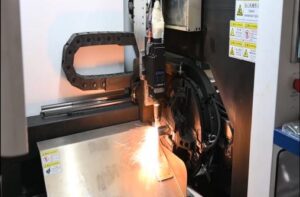
Instead of outsourcing different processes, we integrate every critical manufacturing step into one controlled production system.
That includes:
- Precision Stamping (80–400T / 38 pieces of equipment)
- Laser Cutting (6KW / 2 sets)
- CNC Machining (five-axis + vertical machining center)
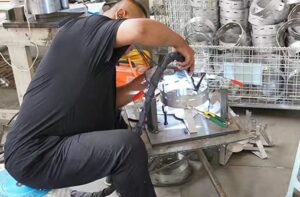
- Welding & Assembly (automatic spot welding + electric welding production line)
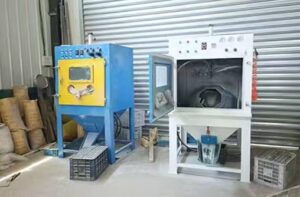
- Surface Finishing (2 production lines)
❗ Because every process follows the same engineering standards, quality doesn’t depend on individual workshops—it depends on one manufacturing system.
Why Equipment Alone Doesn’t Guarantee Stable Production
Even with all the equipment in place, it still failed. The reasons for this were only three:
1. There is no unified engineering control entry.
The drawings were divided and executed separately, with each process understood independently and without any system-level logic. 👉 Partially correct, but overall out of control.
2. The batch production is not designed but “tested.
The samples have been completed through adjustment, but mass production must rely on system replication. 👉 Most factories are good at “adjusting samples” but not at “controlling batches”.
3. There is no consistency constraint between processes
Cutting is OK, welding is OK, and the surface is OK, but cumulative errors after assembly result in overall instability.
Why is “changing suppliers” usually not a solution to the problem?
This is the most prone area for misjudgment in procurement. Many customers believe: Switching to a better factory = problem solved. But the reality is that the equipment remains similar, the processes remain scattered, and the control structure has not changed.
👉 The real conclusion: The problem lies not with the suppliers, but with the structure of the manufacturing system itself.
Why Our Manufacturing System Delivers More Reliable Results
Our stability is not an “advantage based on experience” but rather a result of the structure.
|
✔ 1. Engineering pre-control
Complete the risk analysis of the drawings, the assessment of batch manufacturability, and the locking of the process path before production. 👉 The problems are eliminated before production. |
✔ 2. Unified manufacturing system throughout the process
Stamping, Laser, CNC, Welding, and Surface Treatment are all operated within the same system. 👉 The key is “unified control”. |
✔ 3. Batch consistency control mechanism
What we control is not the quality of individual items, but the stability of errors between batches. |
✔ 4. Long-term order replication capability
Support long-term stable supply, consistency across multiple batches, and concurrent production for multiple projects. |
What 70,000+ Manufactured Parts Have Taught Us
The essence of these experiences is not a resume, but rather: 👉 A verified database of production risks,used to identify structural deformation risks, sources of batch deviations, and combinations of unstable processes in advance.
Every completed project adds to our engineering database, allowing us to predict production risks before they affect quality, delivery, or cost.
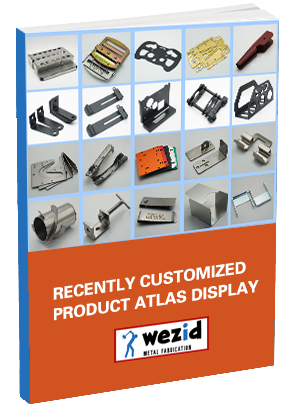
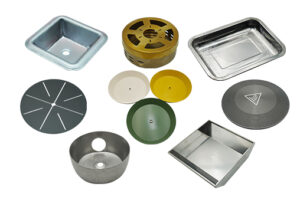
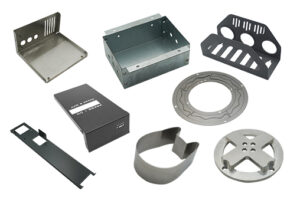
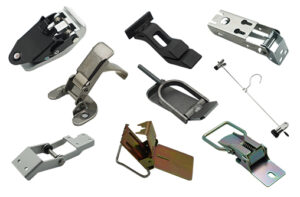
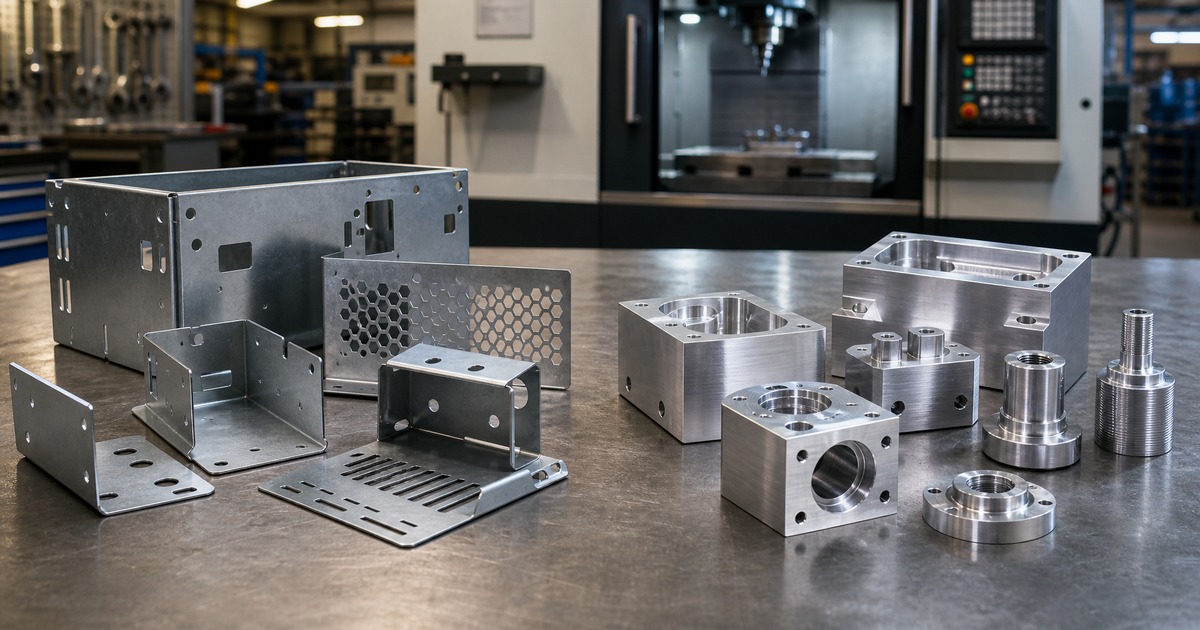
The following custom metal parts demonstrate the range of projects our manufacturing system supports across different industries.

Before You Choose Your Next Metal Fabrication Company
All suppliers can provide equipment, quotations, samples, and production capacity. However, what truly determines the success or failure of the project is: ✔ Whether you choose the “dispersed processing structure” or the “unified manufacturing control system”.
Ordinary suppliers: Can produce products
System manufacturers: Can consistently replicate products over the long term
❗ Stability = Cost control = Project success rate
If your project is at the following stages, this is the critical decision-making window
- In the process of making a sample.
- About to enter mass production
- Batch fluctuations have occurred.
👉 This choice at this stage will determine 70% of the risks and costs in the later stage.
Upload Your Drawings — Get a Production Stability Review
✅ Our engineering team will help you identify potential risks before mass production
| ✓ DFM Review | ✓ Engineering Suggestions | ✓ Preliminary Quotation | Within 24 Hours |
📩 maggie@weizhimetal.com — Response within 24h with DFM feedback & quotation
Contact us for a free production stability validation & engineering review — Send your drawings now
Related Posts
-
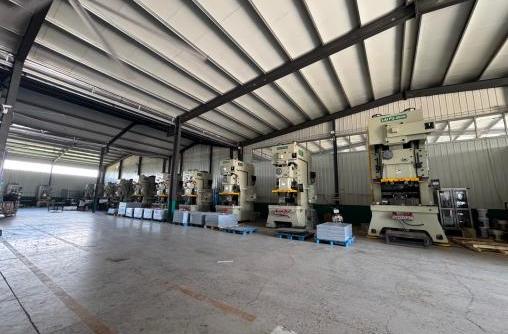
Metal Stamping Services: How a Full-Service Supplier Delivers Your Drawings
Metal stamping services are more than pressing sheet metal into a shape. For a buyer, the real s ...
-
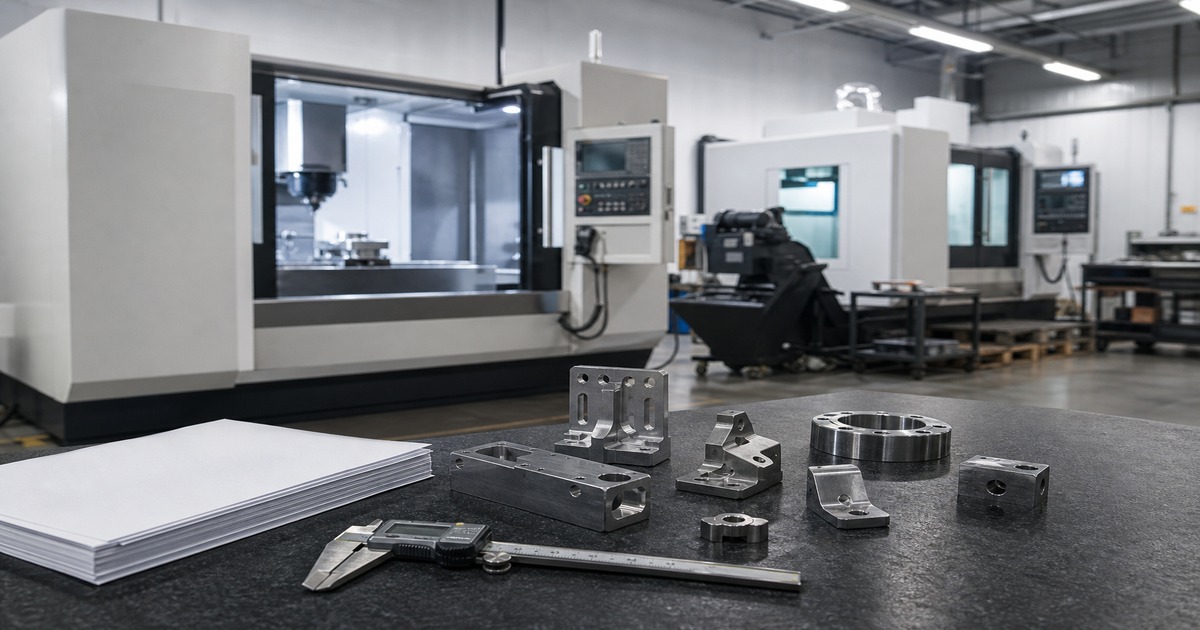
ISO 9001 Certified Sheet Metal Fabricators: Does Certification Reduce Your Total Cost?
An ISO 9001 certified sheet metal fabrication manufacturer’s quote is not necessarily the ...
-
Sheet Metal Fabrication vs CNC Machining: How to Choose
Both processes produce metal parts, but they start from different material forms and add cost at ...