
Sheet Metal Manufacturability: How Manufacturing Capabilities Improve Product Quality and Feasibility
In the manufacturing of metal parts, “sheet metal manufacturability” is not an abstract concept; rather, it is the key factor that determines whether a product can smoothly progress from design to mass production while maintaining stable quality. Essentially, it reflects the degree of compatibility among the factory’s design, engineering, and manufacturing capabilities.
What Is Sheet Metal Manufacturability?
How Engineering Design Affects Manufacturability
In actual manufacturing, the product’s manufacturability is usually determined during the engineering design stage.
• Structural Design:Inappropriate bending radii, overly complex geometric structures, or non-expandable surface designs will significantly increase processing difficulty. They may even require re-adjusting the structure to enable production.
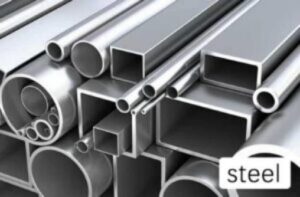
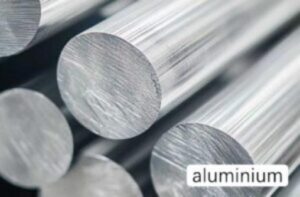
• Material selection:The forming characteristics of different metal materials vary significantly. For example, stainless steel has a strong springback, while aluminum has high ductility. These factors will affect the stability of the stamping and forming processes.
• Tolerance requirements:Excessively strict dimensional tolerances not only increase processing costs but also amplify the fluctuation risks in mass production, making the manufacturing process more difficult to control.
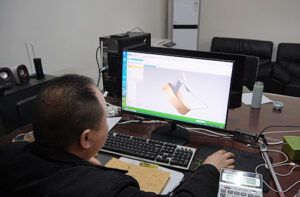

⚙️ Therefore, the rationality of engineering design is the first threshold for manufacturability.
Manufacturing Capabilities Behind Sheet Metal Manufacturability
What truly determines the manufacturability of sheet metal is not just the design, but whether the factory has the system capability to convert the design into a stable product.
Stamping
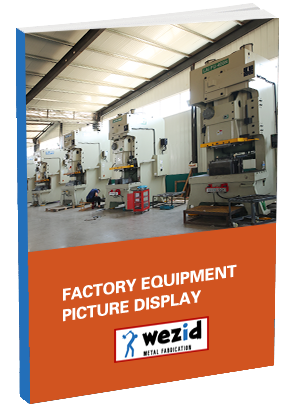
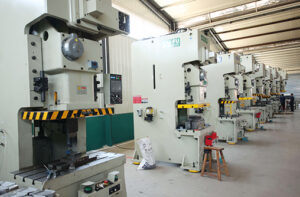
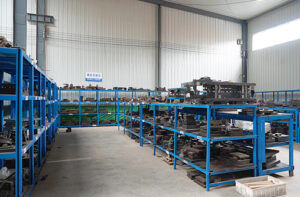
We are equipped with 40 sets of 80–400 ton stamping machines, capable of meeting pressing needs ranging from small precision parts to medium- and large-scale structural components.
• Batch consistency
• Forming stability
• The ability to realize complex structures
Forming
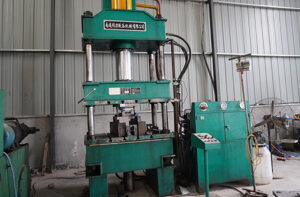
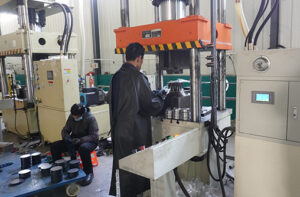
We achieve stable forming control across different structures through a combination of equipment (including 4 sets of hydraulic presses, 3 sets of pipe-bending machines, and CNC bending and processing equipment), ensuring that the material does not develop cracks or springback and does not undergo uncontrollable deformation during processing.
Tooling
With rich project experience (having served 100+ countries worldwide, 3000+ enterprises, and 70,000+ types of parts), we can carry out efficient mold design and optimization, ensuring that the products have:
• Stable material flow control
• Lower deformation risk
• Higher consistency
Process Control
We ensure that each batch of products maintains a consistent processing state through:
• Standardized control of stamping parameters
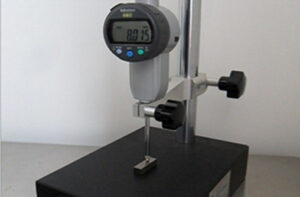
• Process quality monitoring
• First article verification and batch sampling inspection mechanism
• ISO9001:2015 quality system
Turning Design into Manufacturable Parts
In actual projects, our approach is not a single manufacturing process, but an entire engineering system.
Firstly, our 19 experienced engineers conduct manufacturability analyses, including structural evaluation, material selection, and process planning. We also provide free design optimization to reduce manufacturing complexity from the beginning.
Secondly, during manufacturing, we combine stamping, laser cutting, CNC machining, welding, and surface treatment to select the most suitable production method for different structures.
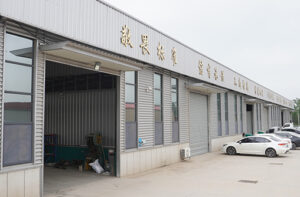
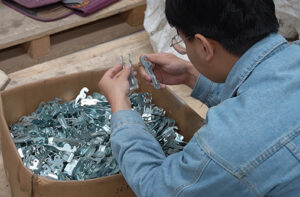
Finally, we implement standardized control and inspection systems to maintain consistency from the first piece to mass production. Our factory also has the capacity to produce 5,000 metal parts per day for different manufacturing projects.
Why Manufacturability Matters in Production
When the manufacturability of sheet metal is systematically realized, the outcome is not merely “capable of production”, but three core values:
Engineering Team Support: If you are developing metal structural components and wish to avoid manufacturing risks during the design stage and enhance the manufacturability and mass-production feasibility of your products. We can provide engineering support and manufacturing optimization services.
Related Posts
-
Press Brake Springback: Why Bends Overshoot and How Factories Compensate
Press brake springback is elastic recovery: when the brake releases, the part straightens a few ...
-
Deep Drawing Sheet Metal: Draw Ratios, Limits & Multi-Hit Setup
Deep drawing sheet metal is a forming operation: a punch pulls a flat blank into a cup or pan sh ...
-

Sheet Metal Gauge Chart: Thickness, Strength & Cost by Gauge
This sheet metal gauge chart is the reference our press engineers use before quoting. Gauge is a ...