
Custom Sheet Metal Fabrication Factory: Things You Should Know Before Ordering
Even well-designed parts can face issues if production control is not stable.
This article explains the key things you should know before placing an order.

Engineering Judgments in Custom Sheet Metal Fabrication
In custom sheet metal fabrication, most factories merely “produce according to the drawings”, but we make a crucial judgment before production: whether it is suitable for direct production or if the process path needs to be redesigned. In our actual projects, the engineering team will focus on checking:
Will bending cause cumulative error in rebound? Optimize the mold compensation in advance.
Should the structure be divided into separate stamping and forming steps to enhance the accuracy of complex components?
Does the assembly structure have the risk of interference? Avoiding such issues in the later stage can be achieved from the design end.
Does the thickness of the material affect the stability of the molding process? Matching appropriate process parameters.
👉Stamping pre-forming + secondary bending to control the structural stability
✔ Many factories do not usually do this step, but it directly determines the stability of mass production.
Process Control and Path Design in Custom Sheet Metal Fabrication
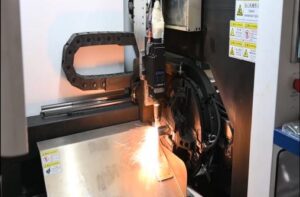
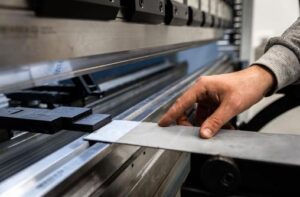
In many factories, workers are only responsible for operating the equipment. However, in our custom sheet metal fabrication process, the most crucial aspect is “process path design”. For instance, for the same part, we will distinguish the stamping forming path, the laser cutting unfolding method, and the bending sequence logic.
We achieve this through standardized process cards: each step of the molding sequence is fixed, the mold parameters are locked, and the process cannot be changed arbitrarily between batches. ✔ This is why our batch products have higher consistency.
Why Does Stamping Capacity Determine Batch Stability?
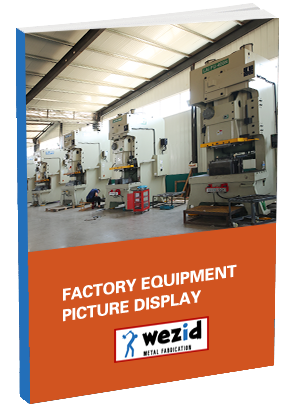
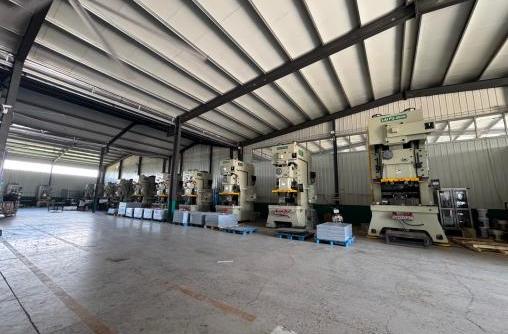
In custom sheet metal fabrication, stamping capability determines batch stability, not machine quantity. However, stable capability still requires a sufficient and properly structured production base. In our production system, we have 38 sets of equipment with capacities ranging from 80 to 400 tons, used to meet the forming requirements for parts of varying structures and thicknesses.
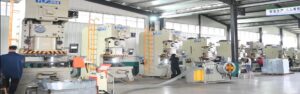
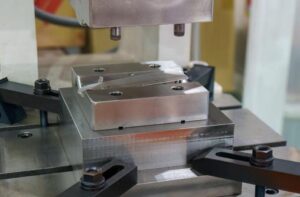
Stamping pre-forming reduces dimensional variation during downstream bending processes.
Different press tonnages are selected based on material thickness and mechanical properties, ensuring stable forming force.
Tooling and press conditions remain fixed during mass production, improving repeatability.
The stamping capacity not only affects the forming effect of a single piece but also directly determines the stability of long-term mass production.
As a result, stamping becomes a core foundation for stable production rather than just a supporting process.
👉Learn more about our stamping services
How Do We Ensure Batch Consistency?
In many factories, “consistency” is merely a slogan. However, in our actual custom sheet metal fabrication process, consistency is achieved through three layers of control:
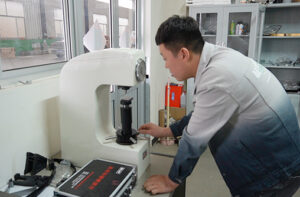
The first full-scale inspection ensures that the mold and the process output meet the standards.
The key parameters are fixed, and the molding conditions cannot be changed arbitrarily for any batch.
Systematic batch sampling inspections, with real-time tracking of consistency fluctuation trends.
If there is a slight deviation in a batch, we will return to the “process path” rather than just modifying the dimensions.

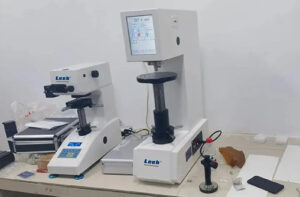
Ordinary factory vs Our factory
Built for Stable and Reliable Production
In custom sheet metal fabrication, the key to success is consistent and reliable production over time, not just manufacturability.
We ensure this through engineering evaluation, controlled process design, and stamping-based forming capability.
📄 Send your drawings for engineering review and quotation →
Realizable Manufacturing Analysis · Ensuring stability of mass production from the first batch to the Nth batch
Related Posts
-
Metal Stamping Services: How a Full-Service Supplier Delivers Your Drawings
Metal stamping services are more than pressing sheet metal into a shape. For a buyer, the real s ...
-
ISO 9001 Certified Sheet Metal Fabricators: Does Certification Reduce Your Total Cost?
An ISO 9001 certified sheet metal fabrication manufacturer’s quote is not necessarily the ...
-
Sheet Metal Fabrication vs CNC Machining: How to Choose
Both processes produce metal parts, but they start from different material forms and add cost at ...